
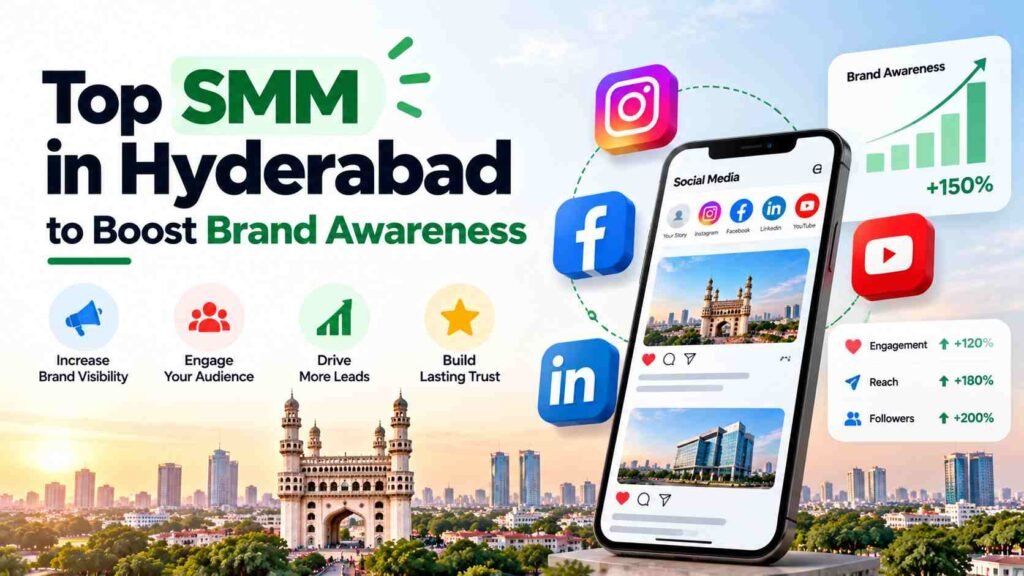
Brand awareness isn’t just about chasing followers. It’s about making sure people remember your business when they’re actually ready to buy.
Social media is a big part of this. Platforms like Instagram, Facebook, LinkedIn, and YouTube let you stay in front of your audience, show what you know, and actually start conversations about your brand.
For most businesses in Hyderabad, the real question isn’t ‘Should we use social media?’ It’s ‘How do we actually use it in a way that gets results?’ You need a plan that covers audience research, content, creative, community management, paid ads, and tracking what works.
Why Does Social Media Matter For Brand Awareness?
People rarely remember a company because they saw one advertisement. Recognition usually develops through repeated and relevant interactions.
A business may appear in a customer’s Instagram feed today, answer a question through a LinkedIn post next week, and later appear in a Google search when the customer is ready to buy. These touchpoints work together.
1. Increasing Brand Recognition
Consistent visual identity, messaging, tone, and content themes make a brand easier to recognize.
Businesses should maintain consistency across:
- Logo and visual identity
- Brand colours
- Typography
- Tone of voice
- Content themes
- Photography and video style
- Key messages
Consistency doesn’t mean posting the same thing over and over. Your brand should feel familiar, but your content should still be fresh.
2. Reaching Relevant Audiences
You don’t need to be everywhere. It’s better to focus on the platforms where your audience actually spends time.
A B2B manufacturer may find LinkedIn more useful for professional audiences, while a restaurant may benefit more from Instagram and Facebook. An education brand may combine Instagram, YouTube, Facebook, and video content to communicate its campus experience.
Go where your audience is. Don’t expect them to come to you.
3. Creating Familiarity Before Purchase
Customers often need several interactions before they trust a business.
Social media can help answer questions before a prospect makes contact. Educational posts, demonstrations, customer experiences, behind-the-scenes content, FAQs, expert insights, and case studies can all contribute to this process.
The goal is to be helpful first, not just push your products.
What Should A Strong SMM Strategy Include?
Actually, a good social media strategy starts way before you design your first post. You need to know your business, your customers, your competitors, and what you want to achieve.
4. Audience And Competitor Research
Before creating content, identify:
- Who are the ideal customers?
- What problems do they have?
- What questions do they ask?
- Which platforms do they use?
- What type of content do they engage with?
- What competitors are already publishing?
- What gaps exist in the market?
Looking at competitors helps you spot patterns, but copying them is a waste of time.
Find ways to show your expertise in a way that’s different from everyone else.
5. Content Pillars
Content pillars provide structure to a social media plan.
For example, a healthcare brand could use:
- Educational information
- Doctor expertise
- Patient awareness
- Services
- Frequently asked questions
A real estate business could focus on:
- Property showcases
- Market insights
- Location advantages
- Buyer education
- Customer stories
Content pillars help you stay consistent without repeating yourself.
6. Creative Content
Social media is visual. If your creative isn’t good or relevant, people will just scroll past.
Depending on the business, content can include:
- Reels
- Carousels
- Short videos
- Infographics
- Static creatives
- Customer testimonials
- Case studies
- Product demonstrations
- Expert videos
- Behind-the-scenes content
Pick the format that actually fits what you’re trying to say.
A complex concept may work better as a carousel. A demonstration may be more effective as a short video. A strong customer statement might work well as a testimonial creative.
7. Copywriting And Storytelling
Your copy needs to make people stop scrolling. Otherwise, it won’t matter.
Instead of making every post sound like an advertisement, brands can use:
- Questions
- Customer problems
- Surprising insights
- Practical tips
- Short stories
- Before-and-after situations
- Industry observations
- Common mistakes
Storytelling works because people remember stories, not random facts.
How Can An SMM Agency Improve Brand Visibility In Hyderabad?
A good agency should handle strategy, creative, campaigns, and tracking results all in one place.
If you’re in Hyderabad, local context matters. Things like customer behavior, competition in your area, language, and buying habits all change how you should approach content.
8. Localized Social Media Strategy
A Hyderabad-focused brand does not necessarily need every post to mention Hyderabad.
Instead, local relevance can be communicated through:
- Local customer problems
- Hyderabad-specific trends
- Regional events
- Location-focused campaigns
- Local testimonials
- Area-specific offers
- Community participation
- Relevant cultural moments
The key is relevance rather than forced location keywords.
9. Paid Social Media Campaigns
Organic and paid content do different jobs.
Organic keeps your brand in front of your audience and builds trust. Paid campaigns help you reach more people and target exactly who you want.
Campaigns can be designed around objectives such as:
- Brand awareness
- Website traffic
- Video views
- Lead generation
- Engagement
- Sales
- Remarketing
A campaign should have a clearly defined objective before budget allocation begins.
10. Community Management
Social media isn’t just about posting and forgetting.
Customers may comment, ask questions, send direct messages, tag the business, or share their experiences. Responding appropriately can strengthen the relationship between the brand and its audience.
Community management should include:
- Comment monitoring
- Direct-message responses
- Customer questions
- Feedback monitoring
- Escalation of complaints
- Response guidelines
- Brand-appropriate communication
A good content calendar gets you noticed, but actually replying to people is what builds real relationships.
11. Connecting Social Media With The Website
Don’t treat social media and your website as separate things.
A social media post can introduce a problem. A website article can explain it in greater depth. A service page can present the solution. A landing page can encourage the visitor to enquire.
This is how social media fits into your bigger digital strategy.
Businesses can connect social campaigns with their digital marketing services, SEO, content, landing pages, and lead-generation systems.
How Should You Measure Social Media Brand Awareness?
Follower count is easy to see, but it doesn’t tell you much about real results.
A smaller, engaged audience is usually worth more than a big, random one.
12. Awareness Metrics
Useful awareness indicators can include:
- Reach
- Impressions
- Video views
- Profile visits
- Follower growth
- Branded searches
- Content shares
- Mentions
These metrics help indicate whether more people are being exposed to the brand.
13. Engagement Metrics
Engagement helps reveal how people interact with content.
Depending on the platform, useful metrics can include:
- Comments
- Shares
- Saves
- Likes
- Video completion
- Link clicks
- Direct messages
Not every engagement has equal business value. A thoughtful enquiry through a direct message may be more meaningful than hundreds of low-intent likes.
14. Lead And Conversion Metrics
If you’re focused on revenue, social media should lead to real actions you can measure.
Track activities such as:
- Enquiry forms
- Phone calls
- WhatsApp conversations
- Appointment bookings
- Product purchases
- Demo requests
- Landing-page conversions
This way, you can actually see how social media drives business results.
Businesses that need broader search visibility can also connect their social strategy with SEO services in Hyderabad and content marketing.
15. Testing And Optimization
Don’t let your social media strategy sit untouched for months.
Test different variables such as:
- Creative formats
- Hooks
- Headlines
- Video length
- Posting times
- Calls to action
- Audience segments
- Landing pages
- Ad messages
Testing isn’t about chasing every new trend. It’s about figuring out what actually works for your audience over time.
How Do You Choose The Right SMM Partner?
Don’t pick an agency just because they have a lot of followers.
Ask real, practical questions before you decide.
What Is Their Strategy Process?
A good agency should clearly explain how they’ll get to know your audience, your competitors, your goals, and what platforms and content you actually need.
Can They Understand Your Industry?
A restaurant, hospital, school, or B2B company shouldn’t get the same social media plan.
Industry knowledge changes everything from your messaging to your content topics.
Do They Measure Business Outcomes?
Ask what they actually report besides likes and followers.
A useful reporting system may include reach, engagement, website activity, leads, campaign performance, and conversions depending on the objective.
Can They Handle Creative And Performance Together?
Brand awareness and lead generation need different campaign setups. It’s better if one team handles strategy, creative, organic, paid, and reporting together.
Always check their past work, how they communicate, what their reports look like, and what you actually get before you sign anything.
Build A Stronger Social Media Presence
Social media isn’t just a checklist. Treat it like a real business channel. Make sure your audience, message, creative, platform, campaign goals, and tracking all work together.
If you’re in Hyderabad, combine local market knowledge with consistent branding, useful content, paid ads, community engagement, and tracking what matters.
If your goal is to build stronger awareness while creating a social media system that supports wider business growth, the next step is to define your audience, objectives, content pillars, and measurement framework.
Ready To Strengthen Your Brand On Social Media?
Contact us today to discuss your social media goals and build a strategy tailored to your business.
FAQs
1. How Can A Top SMM Agency In Hyderabad To Boost Brand Awareness Help My Business?
A Top SMM Agency in Hyderabad to Boost Brand Awareness can develop audience-focused content, maintain consistent brand communication, manage social channels, run paid campaigns, and track performance to strengthen visibility and customer engagement.
2. How Much Does A Top SMM Agency In Hyderabad To Boost Brand Awareness Cost?
The cost of a Top SMM Agency in Hyderabad to Boost Brand Awareness varies according to the number of platforms, content volume, creative requirements, advertising budget, video production, community management, and reporting needs. A suitable budget should be based on business objectives rather than a standard package alone.
3. Can A Top SMM Agency In Hyderabad To Boost Brand Awareness Generate Leads?
Yes. A Top SMM Agency in Hyderabad to Boost Brand Awareness can combine organic content, paid social campaigns, landing pages, calls to action, remarketing, and lead-generation campaigns when lead acquisition is part of the strategy.
4. Which Social Media Platforms Should A Top SMM Agency In Hyderabad To Boost Brand Awareness Focus On?
A Top SMM Agency in Hyderabad to Boost Brand Awareness should select platforms based on the target audience, industry, content format, and business objectives. Instagram, Facebook, LinkedIn, YouTube, and other platforms may be relevant depending on the business.
5. How Long Does It Take To See Results From A Top SMM Agency In Hyderabad To Boost Brand Awareness?
The timeframe for a Top SMM Agency in Hyderabad to Boost Brand Awareness depends on the starting point, audience, content quality, consistency, paid media investment, competition, and objectives. Awareness metrics can move sooner, while stronger brand recognition and business outcomes generally require sustained activity.