
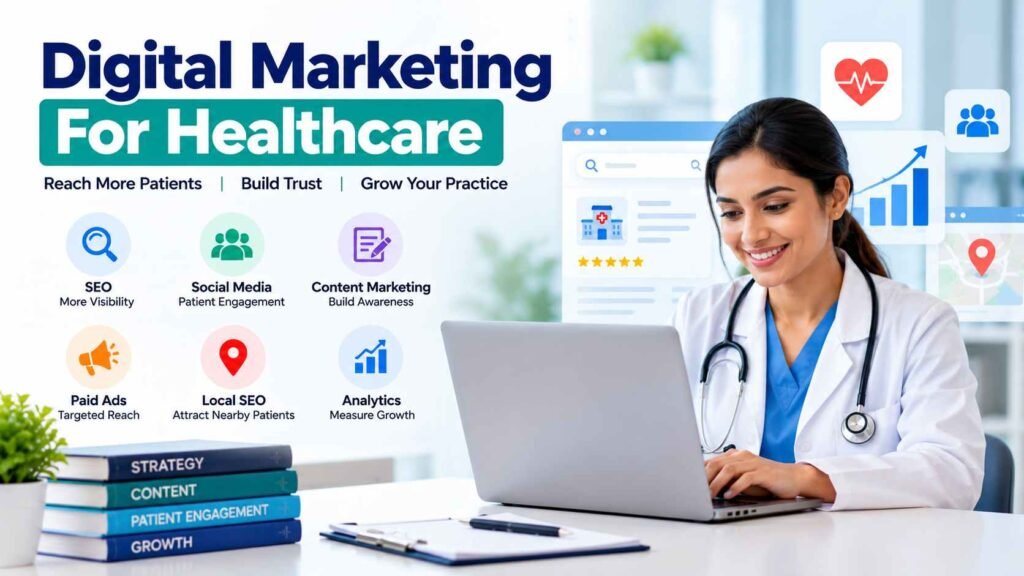
Most patients now start their search for hospitals or clinics online. They compare services, check locations, read reviews, and want to feel confident before booking. If your digital presence doesn’t make it easy for them to find the right information, you’re probably losing out on enquiries.
Digital marketing for healthcare isn’t just about getting more website visitors. It’s about helping people find the right services, understand their options, and actually take action when they need care. That means using search, your website, social media, ads, and educational content in a way that connects with real patient needs.
Actually, a good strategy should combine clear patient communication, responsible ads, accurate info, privacy, and goals you can measure. Here are seven practical ways to do that.
Why Is Digital Marketing For Healthcare Important?
Trust, convenience, and reliable info matter a lot in healthcare. If your online presence is strong, patients can actually find your services and know how to reach you.
1. Help Patients Find Relevant Services
When someone looks for a hospital or specialist nearby, they want clear, accurate info. SEO helps you organize your website so people can find the services they need and get answers to their questions.
For example, create separate pages for each service-like maternity, emergency, cardiology, or diagnostics. Make sure each page explains what you offer and gives clear contact or appointment info.
2. Build Trust Through Clear Communication
Patients are often unsure when picking a healthcare provider. A simple, professional website with clear service info, real reviews, and easy-to-follow appointment steps helps them make a decision.
Healthcare marketing should prioritize accuracy over exaggerated claims. Avoid guaranteeing treatment outcomes or presenting general information as a substitute for individualized medical advice.
3. Make Access to Care More Convenient
Use digital channels to make it easy for patients to find your hours, location, appointment options, and what they need to prepare. The clearer your info, the less confusion and the better the experience.
The goal here is simple: connect people with the info they need, but always respect how sensitive healthcare decisions are.
What Are the Best Digital Marketing Strategies for Healthcare Providers?
Not every channel works for every healthcare provider. The right mix depends on your specialties, location, audience, budget, and how much you can actually handle operationally.
4. Healthcare SEO and Local Search Optimization
SEO helps healthcare websites appear in relevant organic search results. Local SEO is especially important for hospitals, clinics, and diagnostic centres that serve patients in specific locations.
Practical steps include:
- Maintain an accurate Google Business Profile, where eligible.
- Keep addresses, phone numbers, hours, and service details updated.
- Create useful pages for major treatments, specialties, and facilities.
- Use descriptive page titles and headings.
- Encourage genuine patient feedback without pressuring people to leave positive reviews.
- Monitor search performance and website enquiries.
Be careful with healthcare content. People use it to make real decisions. Make sure info about conditions, tests, and treatments is accurate and reviewed by someone qualified.
5. Build a User-Friendly Healthcare Website
Your website is usually the first place patients get to know you. Make sure all the important info is easy to find, whether they’re on a phone or a computer.
Focus on clear navigation, easy-to-read text, fast loading, visible contact details, and simple appointment steps. On each service page, explain what you offer, who provides it, and how patients can get more info.
Forms should collect only necessary information and use appropriate security measures. Avoid collecting sensitive medical details through unsecured forms or sending confidential patient information to advertising platforms.
Website development and SEO should work together. Even a visually attractive website can struggle to support enquiries if visitors cannot find the right service or understand what to do next.
6. Use Educational Content and Social Media Responsibly
Use your content to answer common questions, explain procedures, and help patients get ready for appointments. Try formats like articles, short videos, doctor-approved FAQs, reminders, and clear service explanations.
Share this content on social media to keep patients updated. But avoid making medical claims, using fear, or promising results you can’t guarantee.
Before publishing medical content, establish a review process. Confirm the accuracy of medical statements, use appropriate sources, and obtain permission before using identifiable patient stories or images.
A thoughtful content strategy builds familiarity over time without turning every health concern into a sales message.
7. Use Paid Advertising and Track Enquiries
Paid search and social ads can help you reach the right people. Use search ads when people are actively looking for a service. Use social to introduce your facility or share useful info.
Campaigns should follow the advertising policies and healthcare-related restrictions of the platform and applicable laws. Targeting, ad copy, landing pages, and data collection must be handled carefully, especially when health information is involved.
Track what matters-like appointment requests, calls, and real enquiries. Don’t just look at clicks or impressions. Never send sensitive health info to analytics or ad tools unless you have the right permissions.
How Can Healthcare Organizations Measure Marketing Results?
You need clear goals and a regular review process. If you don’t measure, you won’t know what’s actually bringing in the right patients or enquiries.
Start by deciding what outcome matters most. For a hospital, it might be appointment requests. For a diagnostic centre, maybe it’s test enquiries. Make sure your goal matches your service and can be measured without risking privacy.
Review these indicators:
- Organic search visibility: Impressions and clicks from relevant search queries.
- Website engagement: Whether visitors access important service information.
- Enquiry volume: Calls, appointment requests, and contact-form submissions.
- Lead quality: Whether enquiries relate to services the organization provides.
- Cost per enquiry: Marketing expenditure divided by the number of measured enquiries.
- Appointment outcomes: Where lawful and operationally appropriate, aggregate data on enquiries that progress to appointments.
Google Search Console can help assess organic search performance, while analytics tools may measure website activity when configured correctly. Keep access limited to authorized staff and avoid exposing patient information through reports or tracking systems.
Check your results often and look for ways to improve. If a service page gets traffic but not many enquiries, check if the info is clear, contact options are easy, and it works well on mobile. If your ads get clicks but not real leads, review your targeting, ad copy, and landing page.
Businesses seeking coordinated support across SEO, content, website development, and campaigns can explore Best Digital Marketing Services in Hyderabad from SpaceKey Digital. The appropriate approach should reflect the healthcare organization’s goals, available resources, and privacy responsibilities.
For healthcare providers that need stronger organic visibility, SEO services in Hyderabad can be considered as part of a wider strategy. Providers may also benefit from reviewing website development services when website usability or service-page structure needs improvement.
How Can You Choose the Right Healthcare Digital Marketing Partner?
Healthcare marketing isn’t just about promotion. Your agency or team needs to get medical accuracy, patient privacy, local SEO, ad rules, and know the difference between a marketing lead and an actual clinical outcome.
Before you pick a provider, ask how they research patient search habits, review content, report results, and keep info safe. Get a clear scope of work-what’s included, how often you’ll get reports, who’s responsible, and any extra costs.
Don’t trust anyone who guarantees rankings, patient numbers, or outcomes. Results depend on competition, your services, website quality, how well campaigns are run, and actual patient demand.
At SpaceKey Digital, we handle SEO, content, website development, performance marketing, and more. Make sure any service you choose actually fits your needs and follows healthcare and ad rules.
The right partner will explain things clearly, measure real outcomes, and adjust the plan based on what works-not just promises.
Conclusion
A strong digital presence helps healthcare providers make service information easier to discover, answer common questions, and offer convenient ways for people to get in touch. SEO, a user-friendly website, responsible educational content, paid campaigns, and accurate measurement can work together to support these goals.
Put trust, accuracy, and privacy first. Start with clear goals, fix your most important pages, and use real data to decide what to do next.
Ready to strengthen your healthcare brand’s online presence?
Contact us today to discuss your goals and explore a digital marketing strategy suited to your healthcare organization.
FAQs
1. What Is Digital Marketing For Healthcare?
Digital Marketing For Healthcare uses online channels such as search engines, websites, social media, educational content, and paid advertising to help healthcare providers share accurate information and connect with relevant audiences.
2. Why Is Digital Marketing For Healthcare Important for Hospitals?
Digital Marketing For Healthcare helps hospitals make service information, location details, and appointment options easier to discover online. It can also support patient education and help hospitals measure relevant enquiries when campaigns are properly configured.
3. Which Digital Marketing Channel Is Best for Healthcare Providers?
The best channel for Digital Marketing For Healthcare depends on the provider’s services and goals. Local SEO can support nearby discovery, educational content can answer patient questions, and paid search may help reach people actively looking for specific services.
4. How Can Healthcare Providers Measure Digital Marketing Results?
To evaluate Digital Marketing For Healthcare, providers can monitor relevant search visibility, website activity, enquiries, appointment requests, and campaign costs. Measurement should respect patient privacy and avoid exposing sensitive health information to unauthorized systems.
5. How Much Does Digital Marketing For Healthcare Cost?
The cost of Digital Marketing For Healthcare varies according to the services required, campaign scope, competition, advertising budget, content needs, and website condition. Healthcare organizations should request a transparent proposal with defined deliverables and reporting.