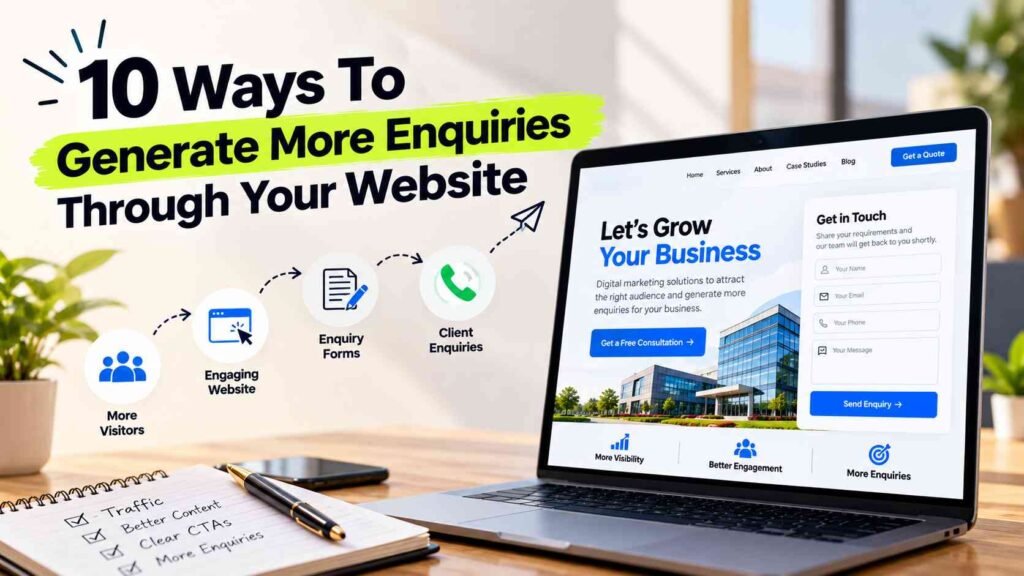
Getting people to your website is just the start. The real work is getting the right visitors to actually reach out-whether that’s asking for a quote, booking a call, or just wanting to know more about what you do.
A lot of businesses spend on SEO, ads, and social media to get more traffic. But then their websites don’t make it clear what visitors should do next. People just look around, check a few services, and leave without reaching out.
The problem usually isn’t lack of interest. It’s that the website makes it feel complicated or pointless to get in touch.
If you want your website to bring in regular enquiries, you need to think about how people actually decide to contact you. Make your value clear, build trust, cut out extra steps, and give visitors a real reason to start a conversation.
Here are ten ways you can make your website actually drive more business.
1. Make The First Step Easy For Potential Customers
One common mistake businesses make is asking visitors to commit before they are ready. Someone who has just discovered your company may not be prepared to purchase a service immediately, especially if the investment is significant.
Instead of pushing for a sale, give visitors a simple way to begin.
Depending on your business, this could be a discovery call, a quick consultation, a project chat, or a custom quote. The main thing is to make reaching out feel low-risk.
For example, a digital marketing agency could invite visitors to discuss their current marketing challenges before presenting a proposal. A website development company could offer a project consultation to understand the client’s requirements.
Be clear about what happens next and what the visitor needs to do.
Don’t offer free stuff or consultations unless you actually provide them. It’s better to be clear and real than to use flashy headlines that don’t match what you deliver.
2. Give Every Important Page A Clear Purpose
When a page contains too many competing messages, visitors may struggle to understand which action matters most.
Your homepage might introduce your business and direct visitors towards your main services. A service page might encourage them to request a quotation. A case study might help them explore similar projects or arrange a discussion.
Every page should have one main goal, even if there are other links around.
Consider these examples:
- Homepage: Explore services or book a consultation.
- Service page: Request a proposal or discuss requirements.
- Case study: View relevant work or enquire about a similar project.
- Blog article: Read related resources or explore a relevant service.
- Contact page: Call, email, submit a form, or book a meeting.
This way, visitors know what to do next instead of getting stuck choosing between random actions.
You don’t need to remove every other link. Just make the next step super obvious.
3. Use Calls To Action That Tell Visitors What Happens Next
A CTA isn’t just a button. It should tell people what they can do and what happens after they click.
Don’t use generic labels like ‘Click Here’ or ‘Submit.’ Be specific so people know what they’re getting into.
For example:
- Discuss Your Project
- Request a Custom Quote
- Book a Consultation
- Get Help With Your Website
- Talk to Our Marketing Team
Put CTAs where they make sense, not just at the bottom. If someone is ready to contact you halfway down the page, don’t make them hunt for the button.
Match your CTA to the content. If it’s an educational article, link to a related guide. If it’s a service page, send them to an enquiry form.
Businesses looking for the Best Digital Marketing Services in Hyderabad should also assess whether an agency’s website makes its services, process, and contact options easy to understand. A clear customer journey reflects a thoughtful approach to digital marketing.
4. Make Contact Options Easy To Find
Not every potential customer wants to contact a business in the same way.
Some prefer calling. Others would rather send an email, complete a form, or choose an available meeting time without waiting for a response.
Give people the contact options they actually want. That way, they can choose what works for them.
At a minimum, display accurate contact information and provide a working enquiry form. Depending on your audience, you might also offer a calendar booking option or a clearly labelled messaging channel.
Make sure these options are easy to find on both mobile and desktop. Don’t hide your contact info behind too many clicks.
But don’t overdo it. Too many pop-ups, floating buttons, or banners just annoy people. Stick to the contact methods your customers actually use and keep it consistent.
5. Explain What Happens After An Enquiry
Contacting a business involves a small amount of uncertainty. Visitors may wonder whether someone will call them repeatedly, whether they will receive a sales pitch, or how long it will take to hear back.
Your website should answer these questions up front so people don’t hesitate to reach out.
Add a short explanation near your form or CTA. For example, you could explain that your team reviews each enquiry, contacts the prospect during business hours, and discusses the requirements before recommending a suitable next step.
If you promise a response time, make it clear-and make sure your team actually delivers.
Don’t say you’ll reply in an hour unless you really can. Empty promises just hurt trust.
Be transparent about your process. It sets the right expectations and shows you’re professional before you even talk.
6. Build Trust Before Asking For Contact Details
People need a real reason to trust you. A nice-looking website isn’t enough.
Trust comes from real proof, clear info, and a good customer experience.
Consider adding:
- Genuine customer testimonials
- Detailed case studies
- Examples of completed projects
- Information about your team’s expertise
- A clear explanation of your process
- Accurate business details
- Relevant certifications or credentials, where applicable
Case studies work well because they show how you solve real problems. Share what the challenge was, what you did, and what results you actually got.
Don’t make big claims like ‘guaranteed rankings’ or ‘guaranteed sales.’ Real, specific proof is way more convincing than hype.
This is especially important when comparing providers of the Best Digital Marketing Services in Hyderabad. Potential clients should be able to evaluate an agency’s experience, understand its working process, and identify whether its services suit their requirements.
7. Keep Your Website Fast And Easy To Use On Mobile
If your website is slow, broken, or hard to use, people will leave before they even see your offer.
Check your key pages on different devices. Focus on your homepage, service pages, landing pages, and contact forms.
Look for practical issues:
- Text that is difficult to read on a phone
- Buttons that are too small to tap comfortably
- Images that take too long to load
- Forms that are difficult to complete
- Overlapping pop-ups
- Broken links or error messages
- Contact details that are difficult to access
Google’s Core Web Vitals can help assess loading performance, responsiveness, and visual stability. These measurements are useful diagnostics, but good scores alone do not guarantee better rankings or more enquiries.
Fix the things that actually affect real visitors first. If your form doesn’t work on mobile, sort that out right away-otherwise, people can’t contact you at all.
8. Keep Enquiry Forms Short And Relevant
Your contact form should only ask for what you really need to start a conversation. Don’t make people jump through hoops.
Some businesses ask visitors to provide their name, phone number, email address, company name, budget, location, service preference, project timeline, and a detailed description before submitting an enquiry.
Certain fields may be necessary for complex projects. Others can wait until the first conversation.
Start with the basics. Usually that’s a name, one way to contact them, and a quick note about what they need.
Use clear labels, explain what’s required, and make sure error messages are simple. Test your form often to be sure enquiries actually reach you.
Check your form completion rates before and after you make changes. Shorter forms usually get more submissions, but keep an eye on lead quality too-not just the numbers.
The goal is to make it easy for real prospects to reach out, while still getting the info your team actually needs.
9. Add Calendar Booking And A Reliable Follow-Up Process
Some visitors are ready to speak with your team but do not want to exchange several emails just to find an available time.
A calendar booking tool lets people pick a time that works for them, so you skip the back-and-forth.
This can be useful for consultants, agencies, professional service providers, and businesses with a structured discovery-call process.
If you add calendar booking, keep your available times up to date, make the meeting length clear, and tell people what to expect after they book.
But booking tools are just one piece. You still need a system to handle every enquiry properly.
Set up a simple process: review new leads, assign them to the right person, record what they need, and follow up quickly. Track how fast your team responds and if those leads turn into real sales conversations.
Your website can bring in great leads, but if you miss submissions or reply too late, those opportunities are wasted.
10. Measure Results And Improve What Is Not Working
Don’t rely on opinions about colours or button text. Use real data to see where visitors get stuck.
Track useful metrics such as:
- Website enquiries and form submissions
- Phone calls and consultation bookings
- Conversion rates on important pages
- Traffic sources that produce qualified leads
- Form abandonment
- Enquiry-to-customer conversion
- The quality and relevance of incoming leads
Suppose a service page receives consistent traffic but generates very few enquiries. Review whether its headline communicates value, whether the content addresses customer concerns, and whether the CTA is easy to find.
If visitors begin completing a form but rarely submit it, investigate the form’s length, usability, and technical performance.
Test changes one at a time. Give it enough time to see real results, and compare before and after instead of just assuming the new version is better.
A good website gets better with regular tweaks and reviews-not just a big redesign every few years.
Putting These Improvements Into Practice
Getting more enquiries isn’t about adding more features. It’s about removing the things that stop people from reaching out.
Start by checking your main service page and how people contact you. Can a new visitor figure out what you do in a few seconds? Is there a clear next step? Can they reach you easily from their phone? Do you give them enough proof to trust you? And does someone actually follow up when they enquire?
Fix the biggest issues first, then keep an eye on what changes.
For businesses investing in SEO, paid advertising, and social media, the website should connect those marketing activities to a clear conversion process. The Best Digital Marketing Services in Hyderabad should not be judged only by the traffic they attract, but also by how effectively they help a business reach relevant audiences and generate meaningful opportunities.
At SpaceKey Digital, we build websites to drive real business results. That means useful content, strong search presence, a clear user journey, and measurable improvements-not just another digital brochure.
Ready To Generate More Enquiries From Your Website?
If you want your website to actually bring in more leads and sales, focus on visibility, trust, and conversions. We can help you spot the gaps and improve your website and digital marketing.
Contact us today to discuss your requirements and discover the right strategy for your business.
FAQs
1. How Can I Generate More Enquiries Through My Website?
Improve SEO, create clear service pages, add strong CTAs, simplify enquiry forms, and build trust with genuine customer reviews and case studies.
2. Why Is My Website Getting Traffic But No Enquiries?
Your website may attract the wrong audience or lack clear messaging, convincing trust signals, or an easy way to contact your business.
3. How Important Is Website Design For Lead Generation?
A clear, mobile-friendly design helps visitors understand your services, navigate important pages, and complete enquiry forms more easily.
4. Should I Add A Contact Form To Every Website Page?
Add a relevant enquiry option to important service and landing pages. The form should suit the page’s purpose without distracting visitors.
5. How Can Digital Marketing Help Generate More Website Enquiries?
SEO, paid advertising, content marketing, and conversion optimization can help attract relevant visitors and encourage them to take the next step.