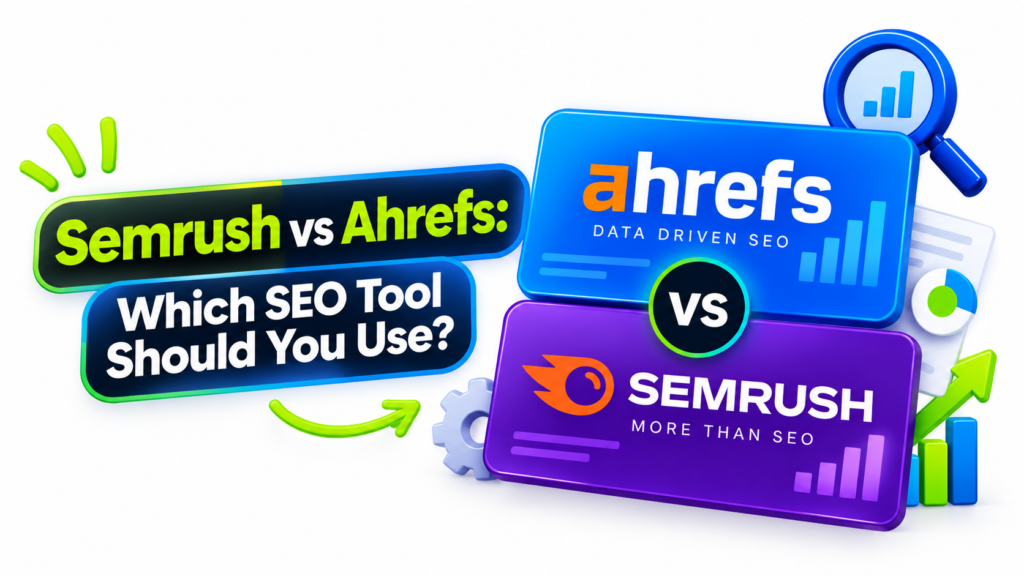
So, picking the right SEO tool isn’t just about features. It’s about how quickly you can find keywords, check what competitors are doing, track your rankings, audit your site, and actually build a content plan that works. Most people end up choosing between Semrush and Ahrefs.
Actually, both Semrush and Ahrefs do a lot more than just keyword research now. You get tools for technical SEO, backlinks, competitor research, rank tracking, content, and even AI-driven search visibility. The real question is, what do you actually need for your SEO process? Your answer will decide which tool makes sense.
Let me break down where each tool is strong, how they fit into real SEO workflows, what you get for the price, and who should use which. That way, you can pick the one that actually fits your business.
Semrush vs Ahrefs: What Are The Main Differences?
Semrush is more of an all-in-one digital marketing platform. Ahrefs is known for being strong in SEO, backlinks, content research, and competitor analysis.
Semrush currently offers tools for keyword research, competitor analysis, position tracking, site audits, local SEO, backlink analysis, advertising research, content optimization, and AI visibility.
Ahrefs includes Site Explorer, Keywords Explorer, Site Audit, Rank Tracker, Competitive Analysis, Brand Radar, and other tools covering search, backlinks, content, and AI visibility.
This difference actually matters. If you’re focused just on organic SEO, you might want different features than a team handling SEO, ads, local search, and content all in one place.
Keyword Research, Backlinks, And Competitor Analysis
Keyword research is one of the first areas most SEO professionals evaluate.
Semrush covers keyword research, competitor analysis, search intent, SERP analysis, position tracking, and paid search. They also claim to have a bigger Google keyword database and stronger paid ad research tools than Ahrefs.
Ahrefs is great for finding keywords, checking competitor pages, seeing where their organic traffic comes from, and digging into backlinks. Their Site Explorer shows you top pages, keywords, links, and even paid traffic for any site.
Both tools are strong for backlink analysis. Semrush says they have 43 trillion links in their database. Ahrefs claims 35 trillion live backlinks and a lot of API options. These numbers are from their own marketing, so take them as rough estimates, not a direct comparison.
If backlinks are a big part of your SEO process, test both tools with your own site and competitors before you decide. What matters is how well they work for your actual niche.
What About Competitor Research?
Both tools can help answer practical questions such as:
Which keywords bring competitors organic traffic?
Which pages perform best?
Where are competitors earning backlinks?
What topics are competitors covering?
Which opportunities are missing from your website?
How are competitors using paid search?
Semrush combines organic and paid competitor research, while Ahrefs’ Site Explorer is heavily oriented toward understanding how websites gain visibility through search, AI, links, and ads.
Technical SEO, Rank Tracking, And Content
Technical SEO is another major consideration.
Semrush’s Site Audit checks technical SEO issues, while its broader platform includes position tracking and content optimization features. Its current SEO plans also include AI-search performance and visibility features.
Ahrefs Site Audit finds technical and on-page issues like Core Web Vitals, titles, meta descriptions, content, indexability, links, redirects, images, JavaScript, robots.txt, sitemaps, and structured data.
If you’re focused on content, your workflow matters. Semrush has built-in content optimization and creation tools. Ahrefs gives you Content Explorer and tools for finding content ideas and link opportunities.
Rank tracking is available on both platforms, although the included limits vary by plan. Current Ahrefs plans include weekly rank-tracking updates, while Semrush’s current SEO plans advertise daily keyword tracking.
Pricing, Ease Of Use, And Best Use Cases
Pricing changes regularly, so it is better to compare current plans rather than rely on old SEO articles.
At the time of writing, Semrush’s current SEO + AI Search pricing page lists its SEO plan at $139 per month on monthly billing, with lower effective pricing when billed annually. Its plans vary by tracked keywords, websites, AI visibility features, historical data, and other capabilities.
Ahrefs currently lists its Lite plan at £99 per month, Standard at £199, and Advanced at £359 on its main pricing page, with different project, keyword, crawl, historical-data, and reporting limits. Ahrefs also offers free access with limitations and a Starter option.
Don’t pick just based on price. Currencies, billing cycles, limits, and features are all different.
Choose Semrush If:
Semrush is a better fit if you want one platform for everything:
SEO and keyword research
Competitor analysis
PPC research
Advertising insights
Local SEO
Content optimization
Position tracking
Technical SEO
AI-search visibility
You also get tools for Google and Meta ads, plus competitor ad research.
Choose Ahrefs If:
Ahrefs may be particularly attractive if your workflow revolves around:
Backlink analysis
Organic competitor research
Keyword research
Content research
Technical SEO
Rank tracking
Link-building opportunities
Search and AI visibility analysis
Site Explorer is built for digging into how sites get traffic, links, and visibility.
Semrush vs Ahrefs: Which SEO Tool Should You Use?
There’s no single winner between Semrush and Ahrefs.
If your work involves SEO plus paid advertising, local marketing, content, and broader competitive intelligence, Semrush may offer the more comprehensive environment.
If your priority is SEO research, backlinks, organic competitors, content opportunities, and website analysis, Ahrefs may be the more natural fit.
If you run an agency, the choice is even trickier. Things like reporting, client count, keyword limits, exports, user access, historical data, and integrations might matter more than any single feature.
The best way is to test both tools on your own site and SEO questions. See which one finds better keyword opportunities, competitor data, backlinks, site audit results, rank tracking, and reporting for your workflow.
Final Verdict
When you’re comparing Semrush and Ahrefs, focus on your real SEO workflow. Ignore the feature lists and look at what actually helps you get results.
Semrush is better if you want a full digital marketing toolkit. Ahrefs is better if you care most about SEO, backlinks, content, and competitor research.
Neither tool replaces SEO expertise. The value comes from how effectively you turn the data into decisions-what pages to improve, which keywords to target, which technical problems to fix, what content to create, and where competitors are gaining an advantage.
For businesses that need help turning SEO data into a practical growth strategy, explore SpaceKey Digital’s SEO services or digital marketing services.
Need a strategy built around your website and business goals?
Contact SpaceKey Digital to discuss your digital growth requirements.
FAQs
1. Is Semrush better than Ahrefs for SEO?
There is no universal winner. Semrush is particularly broad across SEO, advertising, content, local search, and AI visibility, while Ahrefs is especially strong for SEO research, backlinks, content, and competitor analysis.
2. Is Ahrefs better for backlink analysis?
Ahrefs has a strong reputation for backlink analysis and provides extensive link-related research capabilities. However, Semrush also offers a substantial backlink database and backlink analysis features, so testing both with your niche can help determine which workflow suits you.
3. Which tool is easier for beginners?
Both platforms contain many advanced features, so the learning curve depends on what you are trying to accomplish. Beginners should start with keyword research, competitor analysis, site auditing, and rank tracking before exploring more advanced functions.
4. Can I use Semrush and Ahrefs together?
Yes. Some SEO professionals use both platforms because their datasets, interfaces, and workflows can reveal different opportunities. However, using both increases software costs, so it makes sense mainly when the additional insights justify the investment.
5. Which tool should an SEO agency choose?
An agency should consider client count, keyword tracking requirements, reporting, exports, competitor research, backlink analysis, team access, and budget. The best option is the one that fits the agency’s recurring workflow rather than simply having more features.