
Most professional service businesses get clients through referrals and personal connections. That works, but it only takes you so far. These days, people check you out online before they even think about reaching out. If your digital presence is weak, you’re missing out on leads who are already looking for what you offer. A solid online setup lets you show your expertise, build trust, and get in front of the right people.
Actually, digital marketing isn’t just about having a website or running ads. You need a plan that connects your website, SEO, content, social media, and paid campaigns to real business goals. It doesn’t matter if you’re a consultant, accountant, lawyer, architect, or tech provider-the main thing is to attract the right prospects and turn them into long-term clients.
Why Does Digital Marketing Matter for Professional Services?
Professional services involve more than selling a product. Clients are often investing in expertise, reliability, confidentiality, and long-term results. Before choosing a provider, they want evidence that the business understands their problems and can deliver dependable support.
Digital marketing lets people check you out before they ever talk to you.
- Visibility: Make it easy for people to find you on Google and other places they actually look.
- Credibility: Show your expertise with real articles, case studies, and testimonials-not just claims.
- Lead quality: Focus on people who actually need what you offer, not just anyone who clicks.
- Stay top of mind: Don’t disappear after the first touchpoint. Keep showing up while people are deciding.
- Track what matters: Measure real outcomes like enquiries, qualified leads, and booked calls-not just traffic.
For example, a financial consultancy can publish educational articles about business compliance, while an architecture firm can showcase completed projects and explain its design process. Both approaches give prospects a clearer reason to initiate contact.
The goal isn’t just more website traffic. You want the right people, trust, and real business conversations that can turn into clients.
What Are the 10 Essential Digital Marketing Strategies for Professional Services?
What works best depends on your audience, how complex your service is, your competition, and your sales cycle. Here are ten things you can actually start with.
1. Build a Website That Converts Visitors Into Enquiries
Your website needs to say what you do, who you help, and why someone should choose you. Don’t use vague language-make it obvious what you offer.
Set up separate pages for each service. Explain things clearly, list real benefits, answer common questions, and add clear calls to action. Make sure your contact info is easy to find and your forms work well on mobile.
Don’t just use generic buttons like “Learn More.” Use specific actions like “Book a Consultation” or “Discuss Your Project.”
Explore our website development services for conversion-focused website improvements.
2. Strengthen Search Engine Optimization
SEO is about helping the right people find you when they search for what you actually offer. Don’t just chase broad industry keywords-focus on what your real customers are searching for.
For example, if you’re a consultancy, build pages for each service, the industries you serve, and your target locations.
Prioritize:
- Service-specific keywords and search intent.
- Helpful, original website content.
- Clear page titles, headings, and internal links.
- Fast-loading pages and mobile usability.
- Credible references and relevant backlinks.
Treat SEO as a long-term play. Rankings and leads depend on your competition, website quality, and how much you keep improving. Don’t expect instant results.
3. Publish Expertise-Driven Content
Most clients do their homework before reaching out. If you publish content that answers their questions, you show you actually know your stuff.
Consider publishing practical guides, industry updates, checklists, case studies, and explanations of common mistakes. An HR consultancy might discuss employee retention, while an IT services company could explain cybersecurity risks for small businesses.
Don’t write just for keywords. Every article should solve a real problem or help someone make a decision.
A good content plan also gives your sales team something valuable to share with prospects.
4. Use LinkedIn and Relevant Social Media Platforms
Professional services businesses should select social platforms according to their audience and buying behaviour. LinkedIn may be particularly useful for B2B consultancies, recruitment firms, technology providers, and corporate advisors.
Share real opinions, project takeaways, practical tips, and team expertise. Get your experts involved-don’t just post company promos.
Social media should build relationships and credibility. If you only post promos, you might get attention, but you won’t build trust or get good leads.
5. Develop Case Studies and Client Testimonials
Clients want to know what it’s like to work with you. Case studies show the problem, what you did, and what happened.
A good case study explains the client’s challenge, what you did, and the results. Always get permission before sharing names or details.
Don’t exaggerate results or promise that everyone will get the same outcome.
If you can’t name clients, use anonymized examples to show your process and expertise.
6. Invest in Targeted Paid Advertising
Paid ads can help you reach the right people while your organic presence grows. Google Ads are good for people already searching for your service. LinkedIn or Meta ads can help with awareness and lead generation, depending on your audience.
Start with a clear goal, like getting consultation bookings or qualified leads. Build landing pages that match your ads and explain your service clearly.
Track your cost per qualified lead, conversion rate, and actual sales. Cheap leads aren’t a win if they’re not a good fit.
If you’re choosing a digital marketing partner, look for clear reporting and a focus on real business results-not just clicks.
7. Optimize Your Google Business Profile for Local Reach
If you work with clients in a specific area, local search is important. Keep your Google Business Profile up to date with accurate info, services, contact details, and hours.
Ask for real client reviews, but don’t offer rewards for them. Reply to reviews and keep your info consistent everywhere online.
Local visibility matters most for consultants, accountants, lawyers, architects, and agencies working in specific regions.
Local rankings depend on relevance, distance, and how well-known you are. Optimizing your profile helps, but there are no guarantees.
8. Use Email Marketing to Nurture Prospects
In professional services, people usually take time to decide. Most visitors won’t buy right away.
If you have permission, use email to stay relevant-send useful newsletters, resources, updates, or event invites.
Segment your audience by what they care about or where they are in the buying process. Someone who downloads a guide needs different follow-up than someone asking for a proposal.
Keep your emails relevant and respect unsubscribes. The point is to help people decide, not spam them.
9. Improve Lead Tracking and Follow-Up
You lose business if you miss enquiries, reply late, or don’t know which channels bring good clients.
Use a CRM or at least a simple tracking system to log enquiries, where they came from, follow-up status, and results.
Decide what a qualified lead looks like for you-maybe it’s budget, location, business size, or how ready they are.
Look at the whole journey from first contact to signed client. That’s how you spot if the problem is targeting, your website, follow-up, or sales.
10. Measure Results and Improve Your Strategy
Don’t assume what’s working-review your campaigns regularly.
Track metrics that actually tie marketing to business results, like:
- Relevant organic website traffic.
- Enquiry form submissions and consultation bookings.
- Conversion rates across landing pages.
- Cost per qualified lead.
- Lead-to-client conversion rate.
- Revenue generated from identifiable marketing channels.
Check your results every month or as often as makes sense for your sales cycle. Test changes one at a time-like tweaking a headline or making your form simpler-and see what actually works before rolling it out everywhere.
Best Digital Marketing Services in Hyderabad should help you understand these numbers and turn them into real improvements.
How Can You Choose the Right Digital Marketing Approach?
You don’t need to be everywhere at once. Pick channels based on your audience, budget, sales cycle, and what you can actually manage well.
Start with three basics: who your ideal client is, what problem you solve, and what action you want people to take.
Then, check your website, SEO, content, and how you handle enquiries. If your services aren’t clear, fix your website before spending more on ads. If you get traffic but not many leads, look at your calls to action, trust signals, and contact forms.
Set targets you can actually hit and make someone responsible for each part. Review progress often, but give enough time for things like SEO and content to work.
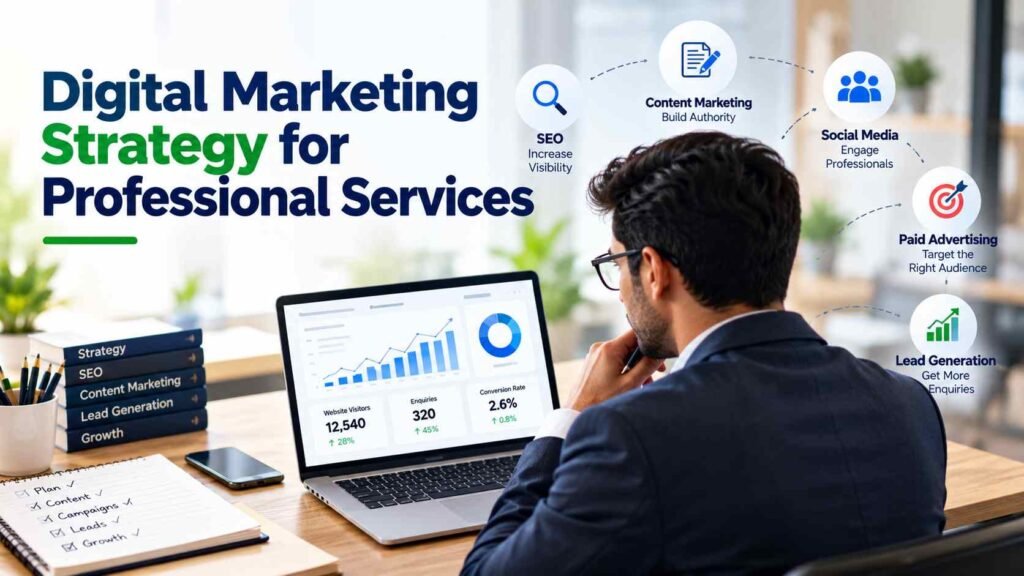
A good digital marketing strategy uses the right mix of channels, not just one-off campaigns. SEO brings in prospects, content builds trust, ads reach specific people, and good follow-up turns interest into real business.
Ready to Strengthen Your Professional Services Business Online?
At SpaceKey Digital, we connect website development, SEO, content, ads, and social media to real business growth. But before jumping in, get clear on your audience, challenges, and what you actually want to achieve.
Contact us today to discuss your requirements and identify practical opportunities to improve your online visibility, attract relevant prospects, and generate more meaningful business enquiries.
FAQs
- What Is a Digital Marketing Strategyfor Professional Services?
A Digital Marketing Strategy for Professional Services is a coordinated plan for using channels such as SEO, content marketing, social media, email, and paid advertising to reach potential clients, demonstrate expertise, and generate relevant business enquiries.
- Which Digital Marketing Channel Is Best for Professional Service Businesses?
The best channel depends on your audience and services. SEO and educational content can support long-term discovery, Google Ads can reach people actively searching for solutions, and LinkedIn can be useful for many B2B businesses.
- How Can Professional Service Providers Generate Qualified Leads Online?
Professional service providers can improve lead quality by targeting relevant search terms, creating focused service pages, publishing helpful content, displaying credible case studies, and using enquiry forms that collect the information needed for an initial assessment.
- How Long Does Digital Marketing Take to Produce Results?
Timelines vary by channel, competition, budget, and starting position. Paid campaigns may generate enquiries soon after launch, while SEO and content marketing typically require sustained effort. Results should be evaluated using lead quality and business outcomes, not just traffic.
- How Much Should a Professional Services Business Spend on Digital Marketing?
There is no universal budget that suits every business. Consider your growth goals, customer acquisition economics, competition, and available resources. Begin with a realistic budget, track performance, and increase investment when the evidence supports doing so.