
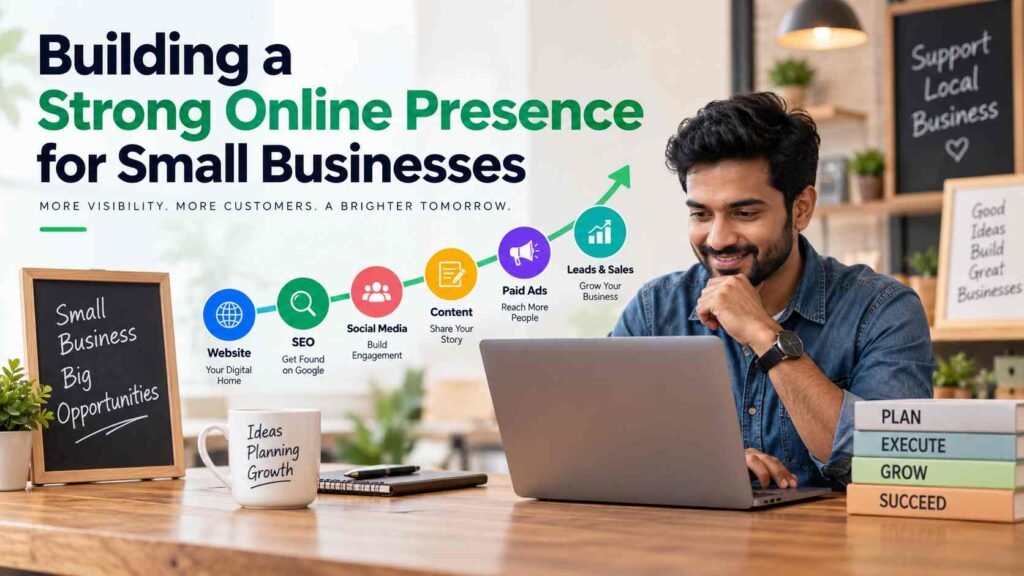
Small businesses don’t have to show up everywhere online. The real goal is to be visible where your actual customers are searching, comparing, and deciding.
Actually, it starts with the basics: a solid website, correct business info, useful content, showing up in search, building trust, and staying consistent. Once that’s sorted, you can look at SEO, social media, paid ads, email, or whatever channels make sense for your goals.
The main thing is making sure everything connects. Your website should help you get found on Google. Social media should back up your brand. Reviews build trust. Paid ads should send people to pages where it’s easy to ask questions or buy.
Why Do Small Businesses Need A Strong Online Presence?
A potential customer may discover a small business through Google, Instagram, a recommendation, an online directory, or a social media post. Before contacting the business, they may check its website, reviews, location, services, photos, and social profiles.
If any of those touchpoints are missing or don’t match up, people will hesitate.
1. Start With A Professional Website
Your website is usually the hub for all your digital marketing. You don’t need a huge site with lots of pages. What matters is that it clearly shows:
- What the business offers
- Who it serves
- Where it operates
- Why customers should consider it
- How customers can get in touch
- What action visitors should take next
If you’re a service business, have clear pages for each service. If you’re a local shop, make sure people can find your products, location, timings, and how to contact you. The site should also work properly on mobile devices. Many potential customers discover businesses through smartphones, so navigation, page speed, readable content, and clear contact options matter.
2. Make Your Business Easy To Find On Google
Showing up in search is one of the simplest ways to reach people who already need what you offer.
SEO isn’t just about adding keywords. It’s about making sure your business shows up when people search for your products, services, location, or even specific questions.
A useful SEO foundation includes:
- Keyword research
- Search-intent analysis
- On-page optimization
- Technical SEO
- Internal linking
- Helpful content
- Mobile usability
- Local SEO
If you’re local, don’t ignore your Google Business Profile. Keep your info, categories, photos, and reviews up to date. It helps people find you and trust you.
3. Build A Recognizable Brand
You don’t need a big ad budget to build a brand people remember.
Consistency beats complexity every time.
Use a consistent approach to:
- Logo and visual identity
- Brand colors
- Typography
- Photography
- Tone of communication
- Key messages
- Offers and promotions
If people see the same brand everywhere-Google, your website, Instagram, even your brochures-they’ll remember you faster.
How Can Small Businesses Build Trust Online?
Getting found is just step one. People also need to trust that your business is legit.
That’s where your content, reviews, and being transparent really matter.
4. Use Customer Reviews As Social Proof
Reviews shape how people see your business. Ask real customers to share their experience, and always reply-good or bad.
Don’t buy fake reviews or make up testimonials. Honest feedback helps you and your customers.
A review strategy can include:
- Asking satisfied customers for honest feedback
- Making the review process easy
- Responding to reviews consistently
- Addressing legitimate complaints
- Monitoring recurring customer concerns
Reviews also show you what people actually like about your business. Use that info in your future marketing.
5. Create Content That Answers Real Questions
Content only works if it actually answers real questions your customers have.
Don’t just post because your calendar says so. Figure out what people ask before they buy, and answer those questions.
For example, a dental clinic could create content about treatment preparation and aftercare. A real estate company could explain documentation and buying processes. A restaurant could publish information about menus, events, or dining options.
Useful content can include:
- Blog posts
- Videos
- FAQs
- Guides
- Case studies
- Social media posts
- Infographics
- Customer stories
The goal is simple: be genuinely useful to your audience and give people more ways to find you online.
6. Keep Social Media Purposeful
A lot of small businesses think they have to post all the time.
Posting often helps, but posting relevant stuff matters more.
A practical social media strategy can combine:
- Educational content
- Product or service information
- Behind-the-scenes content
- Customer experiences
- Team introductions
- FAQs
- Short videos
- Offers and announcements
Pick platforms that fit your audience. If you’re B2B, LinkedIn probably works best. If your brand is visual, focus on Instagram or similar platforms.
Don’t chase followers just for numbers. Social media should help you get more awareness, trust, website visits, or actual enquiries.
If you’re looking for the best digital marketing services in hyderabad, make sure your strategy connects social, SEO, your website, content, and lead generation. Don’t treat each channel as a separate thing.
How Can Small Businesses Turn Online Visibility Into Customers?
Visibility only matters if people can easily go from finding you to actually taking action.
7. Create Clear Calls To Action
Every key page on your site should make the next step super clear.
Depending on the business, that might be
- Call now
- Request a quote
- Book an appointment
- Send an enquiry
- WhatsApp us
- Schedule a consultation
- Buy now
- Visit the store
Don’t confuse people with too many options. One clear call to action makes it easier for them to move forward.
8. Use Landing Pages For Specific Campaigns
Don’t send all your ad traffic to your homepage. It rarely works.
If you’re running ads for a specific service or offer, send people to a landing page that gives them exactly what they need to decide.
A good landing page should have:
- A clear headline
- Relevant benefits
- Supporting information
- Trust signals
- Strong visuals
- A simple conversion path
- Contact or enquiry options
Connecting your ads to the right landing page is even more important if you’re spending money on paid campaigns.
9. Combine Organic And Paid Marketing
SEO can help businesses build organic visibility over time, while paid advertising can provide targeted exposure when campaigns are active.
They can support each other.
Use paid search data to see what words your customers actually use. Use SEO research to find topics to test with ads. Then check your analytics to see which pages and campaigns actually bring in leads.
Don’t expect one channel to fix all your marketing. Balance is key.
How Should Small Businesses Measure Online Marketing?
If you don’t measure, you can’t tell if you’re actually making progress or just staying busy.
The numbers you track should match your business model and goals.
10. Track Business-Relevant Metrics
Useful measurements can include:
- Organic search traffic
- Keyword visibility
- Website enquiries
- Phone calls
- WhatsApp conversations
- Form submissions
- Conversion rate
- Cost per lead
- Advertising spend
- Revenue generated
- Social engagement
- Repeat customers
For example, if you’re a local service, focus on real enquiries and phone calls-not just website traffic.
If you’re running a small e-commerce store, look at sales, revenue, conversion rate, and how much it costs to get a customer.
That’s why building your online presence should be an ongoing process, not just a checklist you tick off once.
11. Improve Based On Actual Customer Behavior
Digital marketing gives you real feedback you can use.
Analytics can show which pages people visit, where they leave, which campaigns generate enquiries, and what content attracts attention. Search data can reveal new topics and customer questions.
Take those insights and actually improve what matters.
If a service page gets visitors but no enquiries, check your messaging, layout, trust signals, offer, and call to action. If a blog post brings in the right people, create more content around that topic.
Keep making small improvements. Over time, that’s what builds a strong digital foundation.
12. Maintain Consistency Across Digital Channels
If your website info is outdated, even the best social media won’t help. If your Google details are wrong, Instagram can’t fix it. If your landing page isn’t clear, your paid ads will struggle.
All your channels need to tell the same story.
Keep your business name, contact info, services, locations, offers, and branding consistent everywhere people find you.
Conclusion
You don’t build a strong digital presence by signing up for every platform or posting just to post. It comes from connecting your website, search, social, content, reviews, ads, and customer experience so they all work together.
For small businesses, this approach helps you focus your limited time and budget. Start with the basics, figure out what your customers are looking for, create something useful, track what matters, and keep improving.
Your online presence works best when every digital activity has a clear purpose and actually helps your customer move forward.
Ready To Strengthen Your Online Presence?
Take the next step toward a stronger digital presence with SpaceKey Digital. From SEO and paid advertising to social media, content, websites, and lead generation, we create strategies aligned with your business goals.
Contact us today to discuss your requirements and discover the right digital marketing strategy for your business.
FAQs
1. What Is The First Step In Building A Strong Online Presence For Small Businesses?
The first step in Building a Strong Online Presence for Small Businesses is creating a clear digital foundation, usually including a professional website, accurate business information, Google Business Profile, social profiles, and defined marketing goals.
2. How Long Does Building A Strong Online Presence For Small Businesses Take?
Building a Strong Online Presence for Small Businesses is an ongoing process rather than a one-time project. Results can vary depending on competition, industry, website condition, marketing channels, budget, and how consistently the strategy is implemented.
3. Does SEO Help With Building A Strong Online Presence For Small Businesses?
Yes. Building a Strong Online Presence for Small Businesses can be supported by SEO because optimized pages and useful content can help potential customers discover the business through relevant searches.
4. Is Social Media Necessary For Building A Strong Online Presence For Small Businesses?
Social media can contribute to Building a Strong Online Presence for Small Businesses by increasing brand visibility, sharing useful content, demonstrating customer experiences, and creating additional communication channels.
5. Can Paid Advertising Support Building A Strong Online Presence For Small Businesses?
Yes. Building a Strong Online Presence for Small Businesses can include paid advertising when targeted campaigns are appropriate for the audience and business goals. Ads can provide additional visibility and direct users to relevant landing pages.