
Digital marketing isn’t just about posting on social media or running ads anymore. It’s about how people actually find your business, check out what you offer, compare you with others, get in touch, and finally decide to buy.
Actually, the main job of best digital marketing is to help you reach the right people online, explain what makes your business useful, get them interested, and track what happens after they see your marketing.
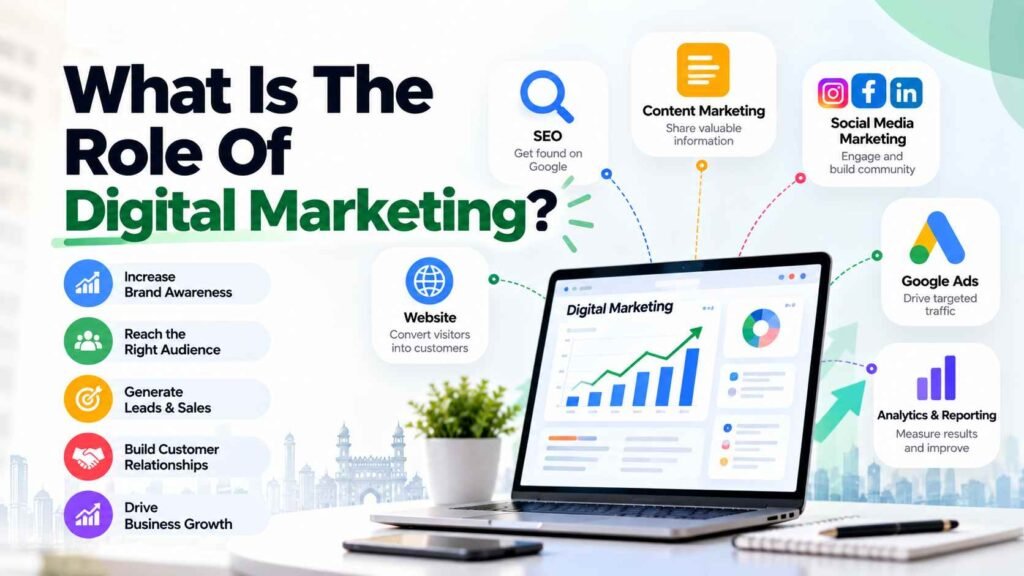
The real value comes when you connect everything-SEO, ads, social media, content, your website, and analytics-instead of treating them like separate jobs.
Why Is Digital Marketing Important For Modern Businesses?
Customers now move between multiple digital touchpoints before making many purchasing decisions. Someone might discover a company through Google, watch its videos on social media, visit its website, read reviews, compare competitors, and finally submit an enquiry.
So digital marketing isn’t just one step. It’s part of the whole customer journey.
- Building Online Visibility
The first thing digital marketing should do is make your business easy to find.
SEO helps search engines understand website content and helps users find relevant pages through search. Google describes SEO as improving a website so search engines can better understand it and users can discover it through Search.
For a business, this can involve:
- Keyword research
- Technical SEO
- On-page optimization
- Local SEO
- Content creation
- Internal linking
- Search performance monitoring
If you get SEO right, it becomes the base for long-term visibility without paying for every click.
- Reaching The Right Audience
Digital channels allow businesses to define and refine their target audiences based on factors such as location, interests, search behaviour, demographics, previous interactions, and customer intent.
For example, a Hyderabad-based healthcare business may want to reach people searching for specific treatments within selected areas. A B2B manufacturer may instead target decision-makers looking for industrial products or services.
Pick your channels and targeting based on your business goal, not just because everyone else is using them.
- Creating Brand Awareness
A customer does not always buy the first time they encounter a company.
Consistent content, useful information, social media activity, videos, search visibility, and advertising can help a business remain familiar to potential customers.
It’s not about just getting seen. Brand awareness only matters if people remember you when they’re ready to take action.
What Is The Role Of Digital Marketing Across The Customer Journey?
Actually, it’s easier to see the role of digital marketing if you break it down by each stage of the customer journey.
- Awareness
At the awareness stage, customers may not know your brand yet. Content marketing, SEO, social media, video, display advertising, and other channels can introduce the business to relevant audiences.
Your content should solve real problems or answer questions, not just push for a sale right away.
- Consideration
Once customers become aware of a business, they often want more information.
They may compare:
- Features
- Pricing
- Reviews
- Expertise
- Case studies
- Service quality
- Location
- Customer experience
This is where you need detailed service pages, comparison guides, testimonials, videos, FAQs, and case studies that actually help people decide.
A well-structured content marketing strategy can help businesses answer these questions while building topical relevance and trust.
- Conversion
Conversion is the point where interest becomes a measurable action.
Depending on the business, a conversion might be:
- A purchase
- Phone call
- Form submission
- Appointment
- WhatsApp enquiry
- Demo request
- Store visit
- Consultation booking
Your website should make it obvious what you want people to do. You can spend a lot on marketing, but if your site is confusing, slow, or has messy forms, people won’t convert.
- Retention And Advocacy
Digital marketing does not necessarily stop after someone becomes a customer.
Keep your customers engaged with emails, helpful content, social media, remarketing, education, asking for reviews, and loyalty offers.
Satisfied customers may also become valuable sources of reviews, referrals, testimonials, and user-generated content.
Which Digital Channels Play A Role In Business Growth?
There’s no one-size-fits-all channel. The best mix depends on your audience, industry, budget, and what you’re actually trying to achieve.
- Search Engine Optimization
SEO is about getting found in search results. It’s best for businesses that want to attract people who are already looking for what they offer.
Google recommends creating people-first content and emphasizes that SEO works best when it helps users rather than being created primarily to manipulate rankings.
- Paid Advertising
Paid ads help you reach potential customers faster and let you target exactly who you want.
Google Ads, for example, allows advertisers to set budgets and target relevant searches and audiences. Campaign performance can also be measured and optimized over time.
But just running ads won’t grow your business. You still need relevant ads, strong offers, good landing pages, proper tracking, and solid follow-up.
- Social Media Marketing
Social media provides businesses with a way to communicate with audiences, demonstrate expertise, share visual content, build communities, and support customer engagement.
The objective should determine the content.
A restaurant may focus on food visuals and local discovery. An educational institution may highlight student activities and campus experiences. A B2B company may focus more heavily on technical knowledge, case studies, and industry insights.
- Content Marketing
Content gives businesses an opportunity to answer questions before a customer contacts the sales team.
Useful formats include:
- Blog articles
- Videos
- Case studies
- Guides
- Infographics
- FAQs
- E-books
- Webinars
- Social posts
Don’t just publish content for the sake of it. Make sure every piece has a clear audience and goal. Generic content that doesn’t solve real customer problems won’t help you grow.
- Websites And Landing Pages
Your website is usually where all your digital marketing efforts pay off and people actually take action.
SEO may bring visitors. Social media may create interest. Ads may generate clicks. Content may establish trust. But the website has to help visitors understand the offer and decide what to do next.
That is why website development and conversion-focused landing pages should be considered part of the marketing system rather than isolated technical projects.
How Does Digital Marketing Help Businesses Measure Results?
One big difference with digital marketing is you can actually measure almost everything.
Businesses can track metrics such as:
- Website traffic
- Search impressions
- Click-through rate
- Cost per click
- Leads
- Conversion rate
- Cost per lead
- Customer acquisition cost
- Engagement
- Revenue
- Return on advertising spend
This is another reason digital marketing matters-you get a feedback loop that helps you improve over time.
If you get 1,000 website visits but only five enquiries, just getting more traffic won’t fix it. You need to check your landing pages, offers, messaging, audience targeting, forms, calls to action, and tracking.
Same with ads-you might get lots of clicks but bad leads. Don’t just spend more. Check your targeting, keywords, ad copy, landing pages, and how you qualify leads.
Google Ads provides tools for measuring advertising performance and connecting campaigns with business actions such as calls, website actions, and purchases.
Connecting Marketing With Business Objectives
Start with your business goal first. That’s what drives a strong digital strategy.
For example:
Goal: Generate more qualified B2B enquiries
Possible approach: SEO + Google Ads + industry content + landing pages + CRM follow-up
Goal: Increase local customer visits
Possible approach: Local SEO + Google Business Profile + reviews + location-focused content
Goal: Increase online sales
Possible approach: SEO + paid advertising + product content + conversion optimization + remarketing
This way, you won’t waste time copying what competitors do without knowing if it fits your business.
Why Integration Matters
SEO, content, social media, ads, your website, and analytics all work better when they’re focused on the same business goal.
A blog can attract organic traffic. That visitor can later see a remarketing campaign. They may return to a service page, download a resource, submit an enquiry, and eventually become a customer.
Each channel is useful, but connecting them across the customer journey is what makes your strategy actually work.
What Are The Common Digital Marketing Mistakes Businesses Should Avoid?
It’s also important to know what digital marketing can’t fix on its own.
Common mistakes include:
- Starting campaigns without clear objectives
- Focusing only on follower counts
- Choosing keywords without understanding intent
- Publishing content without an audience
- Sending paid traffic to weak landing pages
- Ignoring conversion tracking
- Measuring clicks instead of business outcomes
- Using the same strategy for every industry
- Expecting immediate SEO results
- Failing to coordinate marketing and sales teams
Another mistake is treating each channel like a separate department.
You might have an SEO team for traffic, a social team for awareness, and an ads team for leads. But if they’re not working toward the same goal with the same message, you’ll miss out on real results.
A better way is to set your business goal first, understand your audience, map out the customer journey, pick the right channels, get your messaging right, and then track what happens.
Conclusion
So, what’s the real role of digital marketing? It’s about connecting your business with the right people online, building visibility, getting leads, driving sales, keeping customers engaged, and actually measuring growth.
The most effective strategy is rarely about being everywhere. It is about understanding where your customers spend time, what they search for, what questions they ask, and what influences their decisions.
SEO, content, social, ads, your website, and analytics all have their place. When you align them with clear business goals, digital marketing becomes a real growth system-not just a bunch of random activities.
Ready To Build A Stronger Digital Marketing Strategy?
Contact SpaceKey Digital to discuss your goals and build a digital marketing strategy aligned with your audience and business objectives.
FAQs
- What Is The Role Of Digital Marketing For Small Businesses?
For small businesses, digital marketing is mainly about getting found online, reaching the right customers, getting more enquiries or sales, building trust, and tracking what works-instead of relying only on traditional marketing.
- What Is The Role Of Digital Marketing In Lead Generation?
For lead generation, digital marketing connects you with potential customers using SEO, Google Ads, social media, content, your website, landing pages, and email. You can also track actions like forms, calls, bookings, and enquiries.
- What Is The Role Of Digital Marketing In Brand Awareness?
For brand awareness, digital marketing helps you show who you are, what you do, and why it matters-using search, social, video, content, ads, and other digital channels.
- What Is The Role Of Digital Marketing In Sales?
For sales, digital marketing supports the whole journey-from people finding you, to checking you out, to finally buying. It brings in the right audience, answers their questions, shows your value, and guides them to take action.
- What Is The Role Of Digital Marketing In Business Growth?
For business growth, digital marketing helps you reach more potential customers, get seen online, create demand, get and keep customers, and use data to make smarter marketing decisions.