
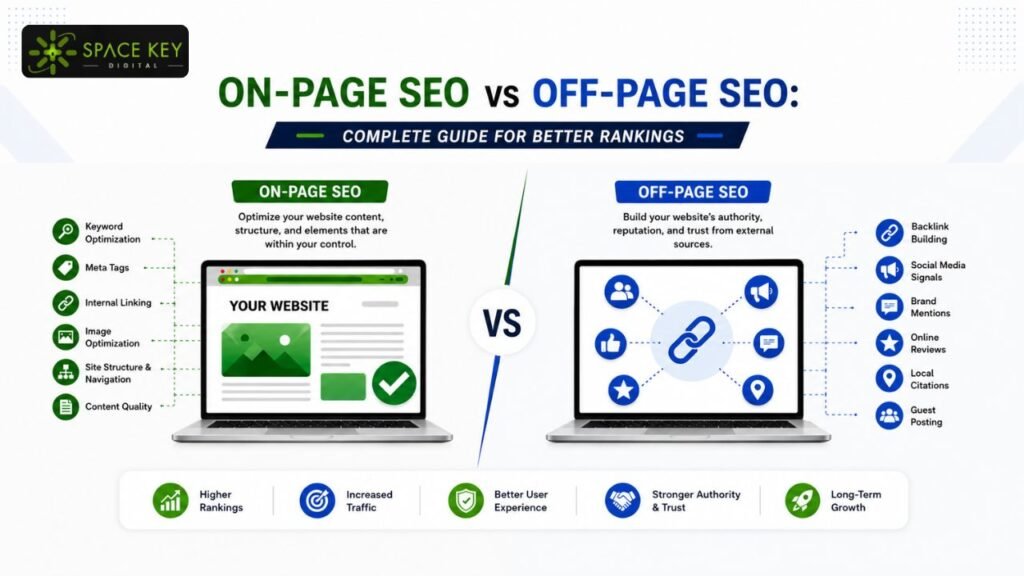
Search engine optimization continues to play a major role in helping businesses improve their online visibility and attract relevant website traffic. Although many businesses use SEO, knowing how on-page and off-page SEO differ is important for developing a strong and sustainable optimization strategy.
Both approaches contribute to better search rankings, but they focus on different optimization areas. One improves the structure and quality of a website, while the other strengthens website authority and trust across external platforms.
This On-Page SEO vs Off-Page SEO: Complete Guide explains how these SEO methods work, why they matter, and how businesses can combine them to improve digital performance and organic growth.
At SpaceKey Digital, businesses receive tailored SEO strategies designed to improve website visibility, search rankings, and long-term online growth through practical optimization techniques.
What is On-Page SEO?
On-page SEO refers to all optimization activities carried out directly within a website. Its main purpose is to help search engines understand webpage content while improving the overall user experience.
This type of SEO focuses on creating webpages that are informative, organized, fast, and easy to navigate. Search engines review several on-page factors before deciding how pages should rank for specific searches.
Important Elements of On-Page SEO
Keyword Placement
Keywords should appear naturally throughout important webpage sections such as:
- Titles
- Headings
- URLs
- Meta descriptions
- Content paragraphs
Using keywords excessively can make content difficult to read and reduce overall quality.
High-Quality Content
Useful and original content improves engagement and increases the chances of ranking for relevant search terms.
Strong content should:
- Answer user questions
- Provide accurate information
- Be easy to understand
- Include proper formatting
Meta Information
Optimized titles and descriptions help search engines identify page topics and encourage users to click on search results.
Internal Website Links
Connecting related pages through internal links improves navigation and helps search engines discover important website sections.
Image Optimization
Properly optimized images improve both accessibility and loading speed.
Recommended practices include:
- Compressed image files
- Relevant ALT text
- Descriptive filenames
Website Organization
Websites with a clear layout and organized structure create a smoother browsing experience while helping search engines access and understand pages more effectively.
Related services:
- SEO Services
- Technical SEO Services
What is Off-Page SEO?
Off-page SEO includes activities performed outside a website to improve authority, credibility, and online reputation.
While on-page SEO improves website relevance, off-page SEO helps search engines evaluate how trustworthy and valuable a website appears across the internet.
Important Elements of Off-Page SEO
Backlink Development
Links from reputable websites act as trust signals and can improve domain authority and rankings.
High-quality backlinks often help websites:
- Improve organic visibility
- Increase authority
- Gain referral traffic
Brand Recognition
Search engines can recognize online mentions of brands even when clickable links are not included.
Guest Content Publishing
Contributing articles to trusted websites can improve brand visibility and establish industry expertise.
Social Engagement
Strong social media engagement may increase content exposure and attract additional website traffic.
Customer Reviews
Positive reviews improve trust and support local SEO visibility.
Business Directory Listings
Accurate local listings help businesses improve location-based search performance.
Off-page SEO strengthens external credibility and supports long-term ranking growth.
Key Differences Between On-Page SEO and Off-Page SEO
Understanding the distinction between these SEO methods helps businesses build stronger optimization strategies.
On-Page SEO | Off-Page SEO |
Focuses on website improvements | Focuses on external credibility |
Improves content relevance | Improves website authority |
Managed directly within the website | Influenced by external platforms |
Includes technical optimization | Includes backlinks and brand mentions |
Enhances user experience | Builds trust and reputation |
The On-Page SEO vs Off-Page SEO: Complete Guide demonstrates that both approaches are necessary for stronger search performance.
Why On-Page and Off-Page SEO Should Work Together
Some companies rely too much on a single SEO method, but using both on-page and off-page strategies together often delivers more consistent and long-term improvements.
Better Search Visibility
Search engines evaluate:
- Content quality
- Website usability
- Authority signals
- External reputation
Using both SEO approaches improves overall ranking opportunities.
Improved User Experience
On-page SEO helps visitors navigate websites smoothly while accessing useful information quickly.
Increased Website Authority
Off-page SEO strengthens trust through backlinks, mentions, and customer engagement across external platforms.
Sustainable Organic Growth
Businesses using balanced SEO strategies often achieve:
- Stable traffic growth
- Better engagement
- Improved lead generation
- Long-term ranking improvements
The On-Page SEO vs Off-Page SEO: Complete Guide highlights how these methods support stronger online growth when combined effectively.
Common On-Page SEO Mistakes
Some websites struggle with rankings because of weak on-page optimization practices.
Excessive Keyword Usage
Repeating keywords too frequently can reduce readability and create a poor user experience.
Duplicate Content
Non-original or repetitive content may negatively affect search performance.
Slow Website Loading
Poor website speed can increase bounce rates and reduce visitor interaction.
Weak Internal Linking
Limited internal connections may reduce crawlability and affect website navigation.
Missing Meta Tags
Pages without optimized titles and descriptions may receive lower click-through rates.
Correcting these issues helps improve both rankings and usability.
Common Off-Page SEO Mistakes
Off-page SEO also requires careful execution to avoid harmful optimization practices.
Poor-Quality Backlinks
Irrelevant or spam-related backlinks can damage website credibility.
Manipulative Link Building
Artificial backlink schemes may violate search engine guidelines.
Ignoring Online Reputation
Negative customer feedback and unmanaged reviews can affect trust.
Inconsistent Local Listings
Inconsistent or outdated business details across online directories can negatively impact local search visibility and customer trust.
Weak Content Promotion
Even strong content may struggle without proper distribution and visibility efforts.
Focusing on authentic and high-quality SEO practices helps businesses maintain long-term authority.
Best SEO Practices for 2026
Businesses looking to improve SEO performance should focus on consistent optimization and user-focused strategies.
Publish Helpful Content
Develop content that provides useful solutions, addresses customer concerns, and delivers meaningful information to readers.
Optimize for Mobile Users
Responsive websites are essential because most users browse using mobile devices.
Improve Website Speed
Fast-loading websites improve user satisfaction and engagement.
Build Quality Backlinks
Earn backlinks naturally through valuable content and trusted industry relationships.
Monitor SEO Performance
Track important metrics such as:
- Organic traffic
- Keyword rankings
- Bounce rates
- Backlinks
- Conversion performance
Tracking SEO performance regularly allows businesses to discover new optimization opportunities and address areas that may need improvement.
Conclusion
SEO success depends on balancing both on-page and off-page optimization efforts. On-page SEO improves content quality, structure, and usability, while off-page SEO strengthens authority, trust, and digital reputation.
Businesses that combine both strategies effectively are more likely to achieve stronger search visibility, steady organic traffic, and long-term online growth. Understanding the role of each SEO method helps businesses build more effective and sustainable optimization campaigns.
At SpaceKey Digital, businesses can access professional SEO solutions focused on improving rankings, visibility, and long-term digital performance.
Contact Us Today Ready to improve your website rankings and strengthen your digital presence? Partner with SpaceKey Digital for customized SEO and digital marketing strategies designed to support your business goals.
FAQs
1. What is the main difference between on-page SEO and off-page SEO?
On-page SEO focuses on optimizing website content and structure, while off-page SEO improves external authority and trust.
2. Why are backlinks important in off-page SEO?
Backlinks help search engines evaluate website credibility and authority.
3. Does on-page SEO improve user experience?
Yes. Proper on-page optimization improves website usability, readability, and navigation.
4. is technical SEO part of on-page SEO?
Technical SEO supports on-page optimization by improving website performance and crawlability.
5. Why should businesses use both SEO strategies?
Combining both methods helps improve rankings, authority, traffic, and long-term online growth.