
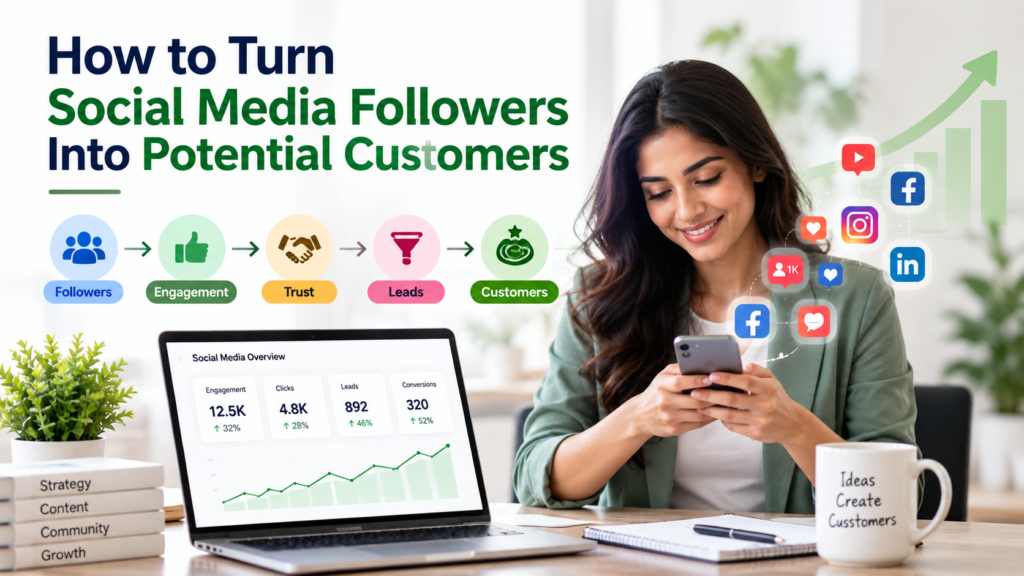
So, social media can get you thousands of followers, but that number alone doesn’t mean your marketing is actually working. I’d rather have a smaller group that asks questions, checks out your website, or actually buys something than a huge audience that just scrolls past everything.
The real challenge is getting people to move from just scrolling to actually engaging, then considering your offer, and finally becoming customers. You can’t do that with just promotional posts. You need to actually understand your audience, share content that’s useful, build trust, and always give them a clear next step.
If you’re trying to figure out how to turn followers into real leads, start by treating social media as part of your customer journey, not just a place to dump content.
Understand What Your Followers Actually Need
Before you even think about getting leads from social, figure out who’s following you and what brought them there.
Not every follower is at the same stage. Some just found you through a Reel or a share. Others already know your brand and are comparing you with competitors. A few might be ready to buy but just need the right info or a reason to act.
This matters because one message won’t work for everyone.
1. Identify Audience Intent
Look at the questions people ask in comments and direct messages. Notice which posts generate saves, shares, profile visits, and website clicks. These interactions can reveal what your audience actually cares about.
For example, if a digital marketing company receives repeated questions about SEO pricing, lead generation, or Google Ads, those questions can become future content topics and conversion opportunities.
2. Create Content Around Problems
Instead of always talking about your products or services, talk about the problems your customers are actually facing.
Educational content can include:
- How-to posts
- Industry tips
- Common mistakes
- Short tutorials
- FAQs
- Before-and-after examples
- Case studies
- Product demonstrations
This way, you attract people because you’re solving their problems, not just asking them to buy something.
3. Separate Awareness From Purchase Intent
Someone watching a 15-second Reel probably isn’t ready to contact you right away. Give them a reason to stick around and keep engaging.
A useful content journey might look like:
Educational post → Profile visit → Helpful resource → Website visit → Enquiry → Follow-up → Customer
Understanding this journey is one of the most important parts of learning how to turn social media followers into potential customers.
Build Trust Before Asking For The Sale
People rarely become customers simply because a business tells them to purchase. Trust often develops through repeated interactions.
Your social media should show followers that you get their needs and can actually deliver what you promise.
4. Show Expertise
Share practical insights that demonstrate your knowledge. If you provide healthcare services, explain complicated topics clearly. If you sell software, demonstrate how it solves common problems. If you provide marketing services, share useful strategies, campaign lessons, or industry observations.
You don’t have to share everything you know. Just show people you know what you’re doing.
5. Use Real Customer Experiences
Testimonials, reviews, case studies, project results, and customer stories can reduce uncertainty.
Instead of saying:
“We provide excellent marketing services.”
Show what you actually worked on, what challenge the client faced, what strategy was implemented, and what changed afterward.
Real proof works better than big claims.
6. Put People Behind The Brand
People connect faster with businesses that feel human.
Show behind-the-scenes, introduce your team, share expert videos, office moments, project discussions, or founder-led content. It makes your company more approachable.
This is especially useful for service businesses where customers want confidence in the people they will work with.
If you’re trying to turn followers into customers, treat trust as an asset that drives conversions, not just something for branding.
Create A Clear Path From Social Media To Conversion
One mistake I see a lot is posting engaging content but not giving followers a clear next step.
If someone likes your post, what do you actually want them to do next?
The answer depends on where they are in their buying journey.
7. Use Strong Calls To Action
Your CTA should tell people exactly what to do next.
Examples include:
- “Send us a DM for details.”
- “Book a consultation.”
- “Visit our website to learn more.”
- “Download the complete guide.”
- “Get a free quote.”
- “WhatsApp us for assistance.”
- “Explore our services.”
Don’t add multiple CTAs to the same post. One clear action is easier for people to follow.
8. Optimize Your Social Profile
Your profile should work like a mini landing page. People should get what you do in seconds.
Make sure visitors can quickly understand:
- What your company does
- Who you help
- Where you operate
- What makes your business different
- How they can contact you
Your bio, profile link, highlights, pinned posts, and contact buttons should work together.
A follower who visits your profile should not have to investigate for several minutes to understand what you offer.
9. Create Conversion-Focused Landing Pages
Sending everyone to your homepage isn’t always the best move.
If you’re promoting a specific service, send people to a landing page that matches what they saw on social. Keep the message consistent.
For example:
Instagram post → SEO service landing page → Enquiry form
This makes the journey smoother and removes unnecessary friction.
For businesses that want to strengthen the website side of this journey, SpaceKey Digital’s SEO Services can support broader search visibility and website optimization.
Turn Engagement Into Meaningful Conversations
Likes are nice, but real conversations usually give you better signals for business.
If someone asks, “How much does this cost?” that’s a much stronger signal than someone just watching your video.
10. Respond Quickly And Personally
When someone comments or messages you, don’t just send a generic reply.
Instead of:
“Please contact us.”
Try:
“Absolutely. We can help with that. Could you tell us which service you are interested in?”
This keeps the conversation going and makes it easier to qualify leads.
For bigger purchases, people usually need a few interactions before they decide. Your team should know how to answer common questions and when to move the chat to WhatsApp, phone, email, or a call.
11. Use Lead Magnets
Not every follower is ready to buy.
A good lead magnet gives people a low-pressure reason to share their contact details.
Examples include:
- Free consultation
- Checklist
- Industry guide
- Assessment
- Calculator
- Sample report
- Product demo
- Free audit
Your lead magnet should actually solve a real problem, not just collect emails for the sake of it.
12. Retarget Interested Audiences
Someone who visited your website or interacted with your social content may already have some awareness of your brand.
Retargeting helps bring these users back with messages that actually matter to them. Don’t just show the same ad over and over. Show content based on what they did last time.
This creates a more connected customer journey.
Measure The Actions That Matter
If you’re only tracking followers, likes, and impressions, you’re missing whether social is actually driving business growth.
Start measuring what happens from engagement all the way to conversion.
Useful metrics include:
Metric | What It Tells You |
Profile Visits | Interest in your brand |
Website Clicks | Movement beyond social media |
DMs | Direct buying interest |
Leads | Potential business opportunities |
Cost Per Lead | Advertising efficiency |
Conversion Rate | Quality of traffic/leads |
Sales | Actual business outcome |
Repeat Customers | Long-term value |
A post with 50,000 views and zero enquiries is less valuable than one with 5,000 views and 30 qualified leads.
That doesn’t mean reach isn’t important. Awareness matters. But you need to connect those numbers to real actions.
This is how turning followers into customers becomes a real, measurable process instead of just a vague social media goal.
For businesses that need a broader strategy across SEO, paid advertising, social media, content, and lead generation, SpaceKey Digital’s Digital Marketing Services can help connect individual channels to wider business objectives.
Build A Consistent Customer Journey
Turning followers into customers almost never happens from just one post.
Someone might find your Reel today, read a carousel next week, visit your website later, watch a testimonial, and only message you after seeing the right offer.
So your content needs to work together as a system.
A practical content mix could include:
40% Educational Content
Teach something useful and answer customer questions.
20% Trust-Building Content
Share testimonials, case studies, team expertise, and behind-the-scenes material.
20% Engagement Content
Use polls, questions, opinions, quizzes, and interactive formats.
20% Promotional Content
Highlight services, offers, products, consultations, or specific conversion opportunities.
These percentages aren’t a magic formula. Your mix depends on your audience, industry, sales cycle, and goals. The main thing is to keep it balanced.
If every post is just selling, people will tune out. If every post just educates with no next step, you’ll get attention but not enough business.
Content marketing can help connect these stages. Businesses can explore SpaceKey Digital’s Content Marketing Services to build content around search visibility, customer questions, and brand authority.
Common Mistakes That Stop Followers From Converting
Even if you’re active on social, you can still struggle with conversions because of a few simple mistakes.
Only posting promotional content: Constant selling can reduce engagement and trust.
Ignoring comments and DMs: A potential customer can quickly move to another business if their questions go unanswered.
Weak CTAs: Followers may be interested but unsure what to do next.
Poor landing pages: A strong social post cannot compensate for a confusing website experience.
Focusing only on follower growth: A bigger audience does not automatically mean more customers.
Using generic content: Posts that could belong to any competitor rarely give people a reason to choose your business.
Failing to follow up: A lead may need additional information before becoming a customer.
The best social strategies connect content, trust, conversations, conversions, and follow-up into one system.
Final Thoughts
Social media followers aren’t customers by default. But with the right journey, they can become valuable leads.
Start by understanding what your audience needs. Publish content that solves real problems. Build trust with expertise and proof. Make your profile easy to navigate, provide clear CTAs, respond to conversations, and guide interested users toward relevant landing pages or direct communication.
Most importantly, track what happens after people engage with you.
The goal isn’t just to collect followers. It’s to build an audience that gets your brand, trusts your expertise, and knows why they should take the next step.
That’s the foundation for turning followers into real customers in a way that’s actually sustainable and measurable.
Ready to grow your business online? Get in touch with SpaceKey Digital today.
Faqs
1. How Can Businesses Convert Social Media Followers Into Customers?
Businesses can focus on useful content, trust-building posts, clear calls to action, direct engagement, landing pages, lead magnets, and consistent follow-up. Together, these elements can guide followers toward taking meaningful action.
2. Does Having More Followers Guarantee More Customers?
No. A large follower count does not automatically result in more sales. Audience quality, engagement, buying intent, trust, and the effectiveness of the conversion process are often more important than follower numbers alone.
3. What Type of Social Media Content Helps Generate Customers?
Educational posts, customer stories, case studies, product demonstrations, FAQs, comparisons, testimonials, and problem-solving content can attract potential customers. The most effective content addresses genuine audience needs and provides useful information.
4. How Important Are Calls To Action?
Calls to action are essential because they clearly tell interested users what to do next. Depending on the business, this could mean sending a message, visiting a website, booking a consultation, requesting a quote, or making a purchase.
5. Should Every Social Media Post Promote a Product or Service?
No. Constantly promoting products or services can make your content feel repetitive. A balanced strategy should include educational, engaging, informative, trust-building, and promotional content to maintain audience interest while creating opportunities for conversions.