
So, even if your website looks great and the content is solid, you might still find it buried in search results. Usually, that’s because the technical setup isn’t strong enough.
Search engines have to find your pages, figure out how they’re organized, and decide which ones to show in search. If there are technical issues, even your best pages might not show up where you want them.
That’s where technical SEO comes in.
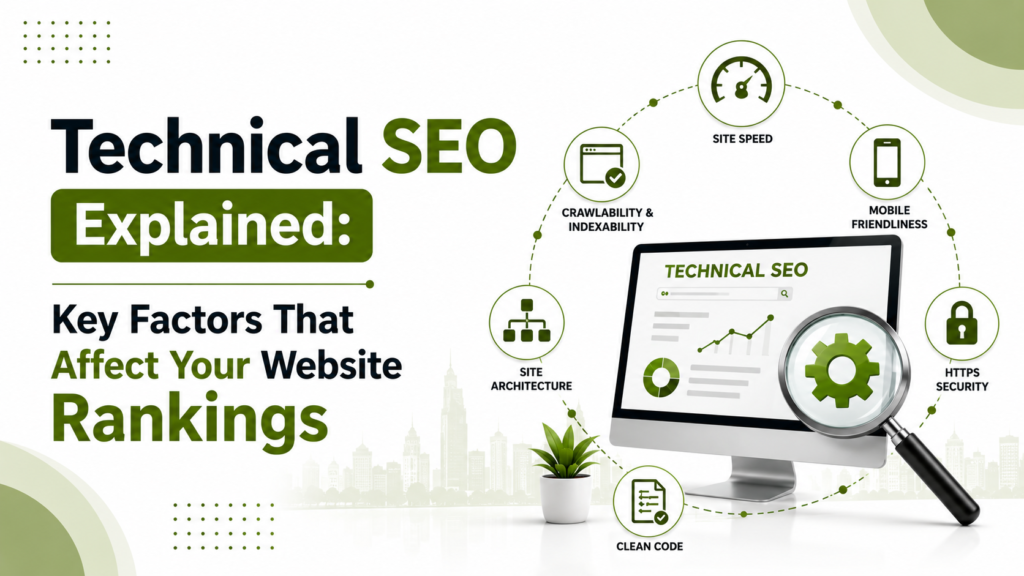
Technical SEO is all about the backend stuff making sure your site can be crawled, indexed, and loaded quickly. It doesn’t replace good content or authority, but it sets the stage so those things actually work.
If you’re looking at technical SEO services in Hyderabad, don’t just chase a checklist of tasks. The real job is to spot what’s actually holding back your rankings and fix those things first.
Why Your Website Needs a Strong Technical SEO Foundation
Technical SEO involves optimizing the technical structure of a website so that search engines can access, interpret, and process its pages efficiently.
Unlike content optimization, technical SEO is usually less visible to website visitors. A customer may never notice a canonical tag, XML sitemap, or crawl directive, but these elements can influence how search engines understand the website.
A technical SEO process commonly covers:
- Website crawlability
- Indexing
- Page speed
- Mobile usability
- XML sitemaps
- Robots.txt
- Canonical URLs
- Redirects
- Structured data
- Internal linking
- Site architecture
- HTTPS and security
- Duplicate content
A solid technical setup just makes it easier for search engines to get to your key pages without running into roadblocks.
Which Technical SEO Factors Can Affect RaNot all technical issues are equal. You need to fix the ones that actually hurt your search visibility or user experience first. Any audit should focus on what impacts your business goals, not just technical scores.
1. Crawlability
Before a page can rank, search engines need to discover it.
Crawlability can be affected by:
- Incorrect robots.txt rules
- Broken internal links
- Poor site architecture
- Excessive redirects
- Orphan pages
- Incorrect navigation. If your important pages are hard to find, search engines might just skip them. Your internal links should make it easy for both users and search engines to move from one useful page to another. another.
2. Indexing
Discovering a webpage and adding it to the search index are two different stages.
Search engines can discover and crawl a webpage without necessarily displaying it in their search results. Indexing problems can arise from incorrect noindex directives, canonicalization issues, duplicate URLs, low-value pages, or other technical signals.
Important pages should be checked regularly to make sure they are:
- Discoverable
- Crawlable
- Indexable
- Canonicalized correctly
This matters even more if you have lots of service, category, product, or location pages.
3. Website Architecture
A logical website structure makes information easier to find and helps search engines understand relationships between pages.
For example, a digital marketing website might organize its structure like this:
Digital Marketing
→ SEO
→ Local SEO
→ Social Media Marketing
→ Content Marketing
Supporting blog content can then link naturally to the relevant service pages.
A good site structure keeps your important pages connected and makes it easier for search engines to understand how everything fits together.
4. Page Speed and Core Web Vitals
Visitors are more likely to expect a smooth, fast experience when browsing on smartphones.
If your site is slow, people leave. Usually, it’s because of big images, too many scripts, bad hosting, or bloated code.
Important performance areas include:
- Loading performance
- Interactivity
- Visual stability
- Image optimization
- Browser caching
- Resource handling
Don’t just chase performance scores. Look at how fast your site feels for real users.
5. Mobile Usability
A website must work properly across different screen sizes.
Common mobile problems include:
- Tiny text
- Difficult navigation
- Buttons that are too close together
- Content wider than the screen
- Slow mobile loading
- Forms that are difficult to complete
Your site should work smoothly on phones, tablets, and desktops. No excuses.
6. XML Sitemap
An XML sitemap provides search engines with a structured list of URLs that you want them to discover.
It can be particularly useful for larger websites with many service pages, blog articles, or frequently changing content.
Your sitemap should be:
- Accessible
- Updated automatically or regularly
- Free from broken URLs
- Limited to important indexable pages
Submitting the sitemap through Google Search Console can always help. It helps you see how Google is actually crawling your site. areas of a website they may or may not access.
A common problem occurs when important content is accidentally blocked.
For example, a poorly configured directive could prevent search engines from reaching pages that should be visible in organic search.
Robots.txt should therefore be reviewed carefully after any big changes—like migrations, redesigns, or new plugins. Always double-check your robots.txt after any big changes. Multiple URLs displaying similar or identical content.
Canonical tags help communicate which version should be treated as the preferred URL.
They can be useful when websites contain:
- URL parameters
- Duplicate product pages
- Filtered pages
- Similar category URLs
- Tracking variations
Incorrect canonical implementation can cause important pages to be ignored or show the wrong ones. If you mess up canonicals, Google might ignore your main pages or show the wrong ones. This can lead to deleted pages, renamed URLs, or moved content.
Set up redirects properly so users and search engines don’t hit dead ends.
Common technical issues include:
- Broken 404 pages
- Redirect chains
- Redirect loops
- Incorrect destination URLs
- Temporary redirects where a permanent move is required
Review your redirects every time you change your site structure.
10. Structured Data
Structured data helps search engines interpret information about a page or business.
Structured data can be tailored to the type of information presented on a webpage, including:
- Organization
- Local business
- Article
- Breadcrumbs
- Product
- Event
- FAQ
Only add schema that matches what’s actually on the page. Don’t try to trick Google with fake or irrelevant markup.
How Does Technical SEO Support Content and Rankings?
Technical SEO does not work in isolation.
You can write great articles, but if Google can’t crawl or index them, it’s wasted effort.
On the flip side, fixing technical stuff won’t make bad content rank.
The strongest approach combines:
Technical foundation + useful content + relevant keywords + good user experience + authority
For example, you might have 50 solid blog posts, but if your internal links are weak, most of them won’t get seen. A technical review can spot and fix that.
That’s why you need to look at your website as a whole system, not just tick off technical SEO tasks. The Right Time for a Technical SEO Checkup?
A technical audit isn’t a one-time thing. It changes continuously. New pages are published, plugins are updated, developers modify templates, redirects are added, and old content is removed.
Consider a full technical review when:
- Launching a new website
- Migrating to a new domain
- Changing CMS platforms
- Redesigning the website
- Creating many new pages
- Organic traffic suddenly drops.
- Indexing problems appear.
- Search Console reports new issues.
Do smaller technical checks on a regular basis. Don’t wait for problems to pile up.
How Can Hyderabad Businesses Benefit From Technical SEO?
For businesses targeting local customers, technical optimization strengthens the foundation for broader SEO work.
A Hyderabad business may need to ensure that:
- Service pages are crawlable.
- Location pages are properly structured.
- Local business information is consistent.
- Important pages are indexable
- Google Business Profile links correctly to the website
- Mobile performance is strong.
- Contact and conversion pages work correctly.
If you’re investing in technical SEO, focus on fixing what actually impacts your rankings. Don’t waste time on changes just because they sound fancy.
How Do You Know Your Technical SEO Is Improving?
Technical SEO progress can be measured through several indicators.
Monitor:
- Indexed pages
- Crawl errors
- Search impressions
- Organic clicks
- Core Web Vitals
- Mobile usability
- Broken links
- Redirect issues
- Crawl statistics
- Organic landing-page performance
Use Google Search Console and analytics to see how your technical fixes are actually affecting your rankings and user behavior.
A good technical score is nice, but focus on fixing what really matters for your site’s performance. The main thing is making your site easy for both search engines and users.
Why Businesses Should Treat Technical SEO as an Ongoing Process
A technically sound website today may develop issues tomorrow.
A plugin update can change page output. A developer can accidentally add a noindex directive. A website migration can create broken URLs. A redesign can remove internal links. A new tracking system can increase page load time.
That is why technical SEO should be part of the ongoing website management process. That’s why technical SEO needs to be part of your regular website management, not just a one-off project. earlier and protect the value of their content and marketing investment.
Conclusion
Technical SEO is basically the foundation. It makes sure your site is easy to access, fast, and organized for both Google and your users.
You’ll get the best results when technical fixes, good content, smart keyword targeting, local SEO, and user experience all work together.
If you’re thinking about technical SEO services, don’t just chase scores or try every recommendation. Figure out what actually affects crawling, indexing, usability, and visibility then fix those things first based on what matters for your business.
If your content is good but you’re not getting the visibility you want, a technical review can usually spot what’s missing.
Ready to strengthen your website’s technical foundation?
Contact SpaceKey Digital to discuss your website and explore a technical SEO strategy tailored to your business.
Frequently Asked Questions
1. What is Technical SEO?
Technical SEO focuses on improving the technical structure of a website so search engines can crawl, understand, and index its pages efficiently.
2. Why is Technical SEO important for rankings?
Technical SEO helps remove structural barriers that can prevent search engines from properly discovering, processing, and evaluating important pages.
3. How often should a Technical SEO audit be done?
A full audit should be performed when major website changes occur, while smaller technical checks should be carried out regularly to catch new issues.
4. What does Technical SEO Services Hyderabad include?
Technical SEO Services Hyderabad may include crawlability, indexing, page speed, mobile usability, XML sitemaps, canonicalization, redirects, structured data, and site architecture.
5. Can Technical SEO alone improve rankings?
Technical SEO can remove important obstacles, but rankings also depend on content relevance, search intent, competition, authority, and overall website quality.